Houston Cash for Gold

Selling Guides

How to Identify Antique Silver Jewelry: Hallmarks, Age, and Value
Silver, Selling Guides

How to Identify Antique Silver Jewelry: Hallmarks, Age, and Value

.sb{ –gold: #c9a227; –gold-lt: #e6c65c; –accent: #3f4a52; –accent-lt: #6d7b86; –accent-dk: #212a31; –charcoal: #14171a; –ink: #1c1c1a; –muted: #6b6f6b; –rule: #e2e6e0; –bg: #fbfaf7; font-family:’DM Sans’,sans-serif; color:var(–ink); background:var(–bg); line-height:1.65; -webkit-font-smoothing:antialiased; overflow-x:hidden; } .sb *{box-sizing:border-box;} .sb h1,.sb h2,.sb h3{font-family:’Playfair Display’,serif;font-weight:600;margin:0;color:var(–ink);} .sb h1{font-size:clamp(2.1rem,4.6vw,3.3rem);line-height:1.12;} .sb h2{font-size:clamp(1.6rem,3.2vw,2.3rem);line-height:1.2;} .sb h3{font-size:1.2rem;line-height:1.35;} .sb p{margin:0 0 1.1em;color:var(–ink);} .sb a{color:var(–accent-dk);} .sb .sb-eyebrow{ text-transform:uppercase;letter-spacing:.16em;font-size:.75rem;font-weight:700; color:var(–gold-lt);margin-bottom:1.1rem;display:block; } /* ———- HERO (CSS background = reliable fallback if the image can’t load) ———- */ .sb-hero{ position:relative;min-height:88vh;display:flex;align-items:center;justify-content:center; text-align:center;overflow:hidden; background: linear-gradient(180deg, rgba(8,10,9,.5) 0%, rgba(6,8,7,.6) 40%, rgba(5,7,6,.92) 100%), radial-gradient(ellipse at 50% 25%, #3a444c 0%, #1c2328 55%, #14171a 100%); background-size:cover;background-position:center; } .sb-hero-bg{ position:absolute;inset:0;width:100%;height:100%;object-fit:cover;object-position:center 30%; z-index:0;opacity:.9; } .sb-hero-overlay{ position:absolute;inset:0;z-index:1; background: linear-gradient(180deg, rgba(10,12,10,.5) 0%, rgba(8,10,9,.52) 38%, rgba(6,8,7,.86) 78%, rgba(5,7,6,.96) 100%); } .sb-hero-inner{position:relative;z-index:2;max-width:800px;padding:0 1.5rem;} .sb-hero h1{color:#fff;} .sb-hero p.sb-lead{ color:rgba(255,255,255,.88);font-size:1.15rem;max-width:620px;margin:1.3rem auto 0;font-weight:400; } .sb-hero .sb-eyebrow{color:var(–gold-lt);} .sb-scroll-cue{ position:absolute;bottom:2rem;left:50%;transform:translateX(-50%);z-index:2; width:22px;height:36px;border:2px solid rgba(255,255,255,.55);border-radius:14px; } .sb-scroll-cue::before{ content:”;position:absolute;top:6px;left:50%;transform:translateX(-50%); width:4px;height:8px;border-radius:2px;background:var(–gold-lt); animation:sbScroll 1.8s infinite; } @keyframes sbScroll{0%{opacity:1;top:6px;}70%{opacity:0;top:18px;}100%{opacity:0;top:6px;}} /* ———- GENERIC SECTION ———- */ .sb-section{max-width:760px;margin:0 auto;padding:4rem 1.5rem;border-top:1px solid var(–rule);} .sb-section:first-of-type{border-top:none;} .sb-section h2{margin-bottom:1.1rem;} .sb-kicker{color:var(–accent-dk);font-weight:700;text-transform:uppercase;letter-spacing:.12em;font-size:.72rem;margin-bottom:.6rem;display:block;} /* ———- KEY TAKEAWAY (answer-engine quotable block) ———- */ .sb-key{max-width:760px;margin:2.4rem auto 0;padding:1.5rem 1.8rem;background:#fff;border:1px solid var(–rule);border-left:4px solid var(–accent);border-radius:6px;} .sb-key-label{font-size:.72rem;letter-spacing:.14em;text-transform:uppercase;color:var(–accent-dk);font-weight:700;margin-bottom:.5rem;} .sb-key p{margin:0;font-size:1.05rem;line-height:1.65;} /* ———- SPLIT SECTION ———- */ .sb-split{max-width:1100px;margin:0 auto;padding:4.2rem 1.5rem;display:grid;grid-template-columns:1fr 1fr;gap:3.2rem;align-items:center;border-top:1px solid var(–rule);} .sb-split.sb-flip{direction:rtl;} .sb-split.sb-flip > *{direction:ltr;} .sb-img-frame{position:relative;border-radius:6px;overflow:hidden;min-height:260px; background:radial-gradient(ellipse at 30% 20%, #3a444c 0%, #1c2328 60%, #14171a 100%); box-shadow:0 18px 40px -18px rgba(0,0,0,.35);} .sb-img-frame img{width:100%;height:100%;object-fit:cover;display:block;min-height:260px;} .sb-split .sb-text h2{margin-bottom:1rem;} @media (max-width:760px){.sb-split{grid-template-columns:1fr;}.sb-split.sb-flip{direction:ltr;}} /* ———- IMAGE BREAK ———- */ .sb-break{position:relative;height:420px;overflow:hidden;margin:0 auto; background:radial-gradient(ellipse at 50% 30%, #3a444c 0%, #1c2328 60%, #14171a 100%);} .sb-break img{width:100%;height:100%;object-fit:cover;display:block;} .sb-break::after{content:”;position:absolute;inset:0;background:linear-gradient(180deg,rgba(5,7,6,.15),rgba(5,7,6,.72));} .sb-break-quote{ position:absolute;inset:0;display:flex;align-items:center;justify-content:center;text-align:center;z-index:2;padding:1.5rem; } .sb-break-quote p{ font-family:’Playfair Display’,serif;font-style:italic;color:#fff;font-size:clamp(1.2rem,2.6vw,1.7rem); max-width:720px;margin:0;line-height:1.4; } /* ———- FACTS / TIPS GRID (shared card pattern) ———- */ .sb-grid-wrap{max-width:1100px;margin:0 auto;padding:4.2rem 1.5rem;border-top:1px solid var(–rule);} .sb-grid-wrap > .sb-kicker,.sb-grid-wrap > h2,.sb-grid-wrap > .sb-sub{max-width:760px;margin-left:auto;margin-right:auto;text-align:center;} .sb-grid-wrap > h2{margin-bottom:.6rem;} .sb p.sb-sub{color:var(–muted);margin-bottom:2.4rem;} .sb-cards{display:grid;grid-template-columns:1fr 1fr;gap:1.6rem;margin-top:2rem;} .sb-card{background:#fff;border:1px solid var(–rule);border-radius:10px;padding:1.8rem 1.7rem;} .sb-card-num{font-family:’Playfair Display’,serif;font-size:2.1rem;color:var(–gold);opacity:.85;line-height:1;margin-bottom:.6rem;} .sb-card h3{margin-bottom:.5rem;} .sb .sb-card p{color:var(–muted);font-size:.95rem;margin:0;} @media (max-width:640px){.sb-cards{grid-template-columns:1fr;}} /* ———- FAQ ———- */ .sb-faq-wrap{max-width:760px;margin:0 auto;padding:4.2rem 1.5rem;border-top:1px solid var(–rule);} .sb-faq-wrap h2{margin-bottom:.5rem;} .sb p.sb-faq-sub{color:var(–muted);margin-bottom:2.2rem;} .sb-faq-item{border-bottom:1px solid var(–rule);} .sb-faq-q{ width:100%;text-align:left;background:none;border:none;cursor:pointer; display:flex;justify-content:space-between;align-items:center;gap:1rem; padding:1.3rem 0;font-family:’DM Sans’,sans-serif;font-weight:600;font-size:1.02rem;color:var(–ink); } .sb-faq-icon{flex:none;width:26px;height:26px;border-radius:50%;border:1.5px solid var(–accent); color:var(–accent-dk);display:flex;align-items:center;justify-content:center;font-size:1.1rem;transition:transform .3s ease;} .sb-faq-item.open .sb-faq-icon{transform:rotate(135deg);} .sb-faq-a{max-height:0;overflow:hidden;transition:max-height .35s ease;} .sb-faq-a p{color:var(–muted);padding-bottom:1.3rem;margin:0;font-size:.97rem;} /* ———- CTA ———- */ .sb-cta{ position:relative;background:var(–charcoal);padding:5.2rem 1.5rem;text-align:center;overflow:hidden; } .sb-cta::before{ content:”;position:absolute;inset:0; background:radial-gradient(circle at 50% 20%, rgba(160,176,188,.22) 0%, rgba(20,23,26,0) 60%); } .sb-cta-inner{position:relative;z-index:1;max-width:640px;margin:0 auto;} .sb-cta .sb-eyebrow{color:var(–gold-lt);} .sb-cta h2{color:#fff;margin-bottom:1rem;} .sb .sb-cta p{color:rgba(255,255,255,.8);max-width:520px;margin:0 auto 2rem;} .sb-cta-btns{display:flex;gap:1rem;justify-content:center;flex-wrap:wrap;} .sb-btn{ display:inline-block;padding:.95rem 2rem;border-radius:4px;font-weight:700; text-decoration:none !important;font-size:.95rem;letter-spacing:.02em;line-height:1.3; border:2px solid transparent;text-shadow:none; transition:transform .2s ease,background-color .2s ease,color .2s ease,border-color .2s ease; } .sb-btn:hover{transform:translateY(-2px);} .sb-btn:focus-visible{outline:3px solid var(–gold-lt);outline-offset:3px;} .sb-btn-primary{background:var(–gold) !important;color:#14171a !important;border-color:var(–gold) !important;} .sb-btn-primary:hover,.sb-btn-primary:focus{background:var(–gold-lt) !important;color:#14171a !important;border-color:var(–gold-lt) !important;} .sb-btn-ghost{background:rgba(255,255,255,.12) !important;color:#ffffff !important;border-color:#ffffff !important;} .sb-btn-ghost:hover,.sb-btn-ghost:focus{background:#ffffff !important;color:#14171a !important;border-color:#ffffff !important;} .sb-btn-dark{background:var(–charcoal) !important;color:#ffffff !important;border-color:var(–charcoal) !important;} .sb-btn-dark:hover,.sb-btn-dark:focus{background:var(–accent-dk) !important;color:#ffffff !important;border-color:var(–accent-dk) !important;} .sb-btn-outline-dark{background:#ffffff !important;color:#1c1c1a !important;border-color:#1c1c1a !important;} .sb-btn-outline-dark:hover,.sb-btn-outline-dark:focus{background:#1c1c1a !important;color:#ffffff !important;border-color:#1c1c1a !important;} .sb-cta-note{color:rgba(255,255,255,.72);font-size:.9rem;margin:1.6rem 0 0;} .sb-cta-note a{color:#e6c65c !important;text-decoration:none;font-weight:700;} @media (max-width:600px){ .sb-btn{display:block;width:100%;} } /* ———- INLINE SERVICE CTA ———- */ .sb-inline-cta{max-width:760px;margin:0 auto 1rem;padding:2.4rem 1.8rem;background:#fff;border:1px solid var(–rule);border-left:4px solid var(–gold);border-radius:8px;text-align:center;} .sb-inline-cta h3{margin-bottom:.5rem;} .sb .sb-inline-cta p{color:var(–muted);font-size:.97rem;margin:0 0 1.4rem;} .sb-inline-cta .sb-btn{margin:.3rem;} /* ———- COMPARISON TABLE ———- */ .sb-table-wrap{overflow-x:auto;margin:1.4rem 0 .6rem;border:1px solid var(–rule);border-radius:8px;background:#fff;} .sb-table{width:100%;border-collapse:collapse;font-size:.95rem;min-width:560px;} .sb-table th{background:var(–charcoal);color:#fff;text-align:left;padding:.8rem 1rem;font-weight:600;} .sb-table td{padding:.75rem 1rem;border-top:1px solid var(–rule);color:var(–ink);vertical-align:top;} .sb-table tbody tr:nth-child(even){background:#f6f7f5;} .sb-table-note{font-size:.88rem;color:var(–muted);} /* ———- SCROLL ANIM (progressive enhancement only) ———- Content is fully visible by default. The hidden/animated state is only switched on after JS confirms it can run and observe scroll, so the post never disappears in CMS previews, email clients, or any place that strips

How to Sell Chrome Hearts Jewelry: Spot a Fake, Know the Resale Value, and Get Paid in Houston
Designer Jewelry, Selling Guides

How to Sell Chrome Hearts Jewelry: Spot a Fake, Know the Resale Value, and Get Paid in Houston

Home Services Sell Chrome Hearts Free Appraisal · Same-Day Cash Sell Chrome Hearts in Houston, TX Rings, cross pendants, chains, and 22K gold pieces, authenticated, tested, and weighed right in front of you in the Heights. One clear offer, paid the same visit. Call (832) 295-9155 Free Online Appraisal Free, no obligation Authenticated in front of you Paid the same day Walk-ins welcome The short answer To sell Chrome Hearts in Houston, bring it to Houston Cash For Gold at 1801 Durham Drive Suite 9 in the Heights, a short drive from downtown, Montrose, and the Galleria. As a Chrome Hearts buyer in Houston, we buy Chrome Hearts rings, cross and dagger pendants, chains, bracelets, earrings, and 22K gold pieces in any condition. Every piece gets a free appraisal: we check the stamps and finish, test the metal, and weigh it on a certified scale in front of you, then make one offer based on authenticity, model, condition, metal content, and current resale demand. Accept it and you are paid the same day. Call (832) 295-9155. What we buy Chrome Hearts Pieces We Buy in Houston Brand new or worn every day for years. If it is authentic Chrome Hearts, it has a market. Chrome Hearts Rings Floral Cross, Keeper, Spacer, Scroll Band, Cemetery, and Forever rings in any size. Cross & Dagger Pendants Cross pendants, dagger pendants, and charms, with or without the chain. Chains & Necklaces Paper chain, ball chain, and fancy link necklaces in sterling silver. Bracelets ID bracelets, link bracelets, and cuffs, including clasps with the CH logo. Earrings & Studs CH Plus studs, cross studs, and hoops, single earrings included. 22K Gold Pieces Chrome Hearts rings, pendants, and chains made in 22K gold. Diamond & Pave Pieces Silver and gold Chrome Hearts set with factory diamonds. Worn, Broken & Engraved Scratched rings, snapped chains, and personalized pieces still have value. Stamps, finish, and weight are checked at the counter, where you can watch. How we price Chrome Hearts Sell Chrome Hearts Jewelry for More Than Melt Chrome Hearts is one of the few silver brands that resells well above its metal value. Whether you want to sell Chrome Hearts rings, a cross pendant, or a full stack of chains, we price the brand, not just the silver, and we show you how the number was built. That is what sets a dedicated Chrome Hearts buyer in Houston apart from a scrap counter. Authenticity first. Stamps, logo placement, engraving depth, and finish are checked together, never one sign alone. Metal test and weight. We confirm .925 sterling or 22K gold and weigh each piece on a certified scale. Model and size. Popular rings, crosses, and chains in common sizes bring the strongest offers. Condition and paperwork. Wear, damage, receipts, and packaging all move the final number. Authentication How We Tell Real Chrome Hearts From a Replica Chrome Hearts is one of the most copied jewelry brands in the world, so a logo is not enough. Purity marks also have to be honest: under the FTC Guides for the Jewelry Industry, a piece marked sterling or 925 must be at least 92.5% silver, and a karat mark must match the gold inside. What we check Authentic pieces show Common red flags Stamps Clean, deep Chrome Hearts or CH marks with 925 or 22K Shallow, crooked, or misspelled stamps Weight Solid, heavy feel for the size Light or hollow pieces Detail and finish Sharp edges, crisp crosses, even dark oxidation Soft, blurry, cast looking detail Metal test Passes as sterling silver or 22K gold Magnetic, plated, or brass under the surface Paperwork A store receipt that matches the piece A box or pouch with no receipt (they are copied too) The floor under every offer: a 20 gram sterling ring holds 20 × 0.925 = 18.5 grams of pure silver, which is 18.5 ÷ 31.1 = about 0.59 troy ounces. Multiply by the day’s silver spot price and you have the melt value. On authentic Chrome Hearts, that melt value is only the starting point. The brand premium usually adds far more. Gold and diamond pieces are priced on metal, stones, and brand together. Gold and diamonds Chrome Hearts 22K Gold and Diamond Pieces Most Chrome Hearts is sterling silver, but the brand also makes rings, pendants, and chains in 22K gold, some set with diamonds. Those pieces carry real gold value on top of the brand premium, so they are weighed and tested separately. Metal or stone Purity How we price it .925 sterling silver 92.5% Silver weight plus brand premium 22K gold 91.6% Gold weight plus brand premium Factory diamonds Varies Checked for size and quality, added to the offer Selling plain sterling or gold alongside your Chrome Hearts? See our silver buyer in Houston page. 1988Year Chrome Hearts was founded in Los Angeles 92.5%Silver in Chrome Hearts .925 sterling 91.6%Gold in Chrome Hearts 22K pieces $0Cost to authenticate and appraise Our process How Selling Chrome Hearts Works Here One visit, start to finish. Every step happens where you can see it. 1 Walk In Bring your pieces, any receipts, and a photo ID. 2 Authenticate We check stamps, detail, and finish on every piece. 3 Test and Weigh Metal is confirmed and weighed on a certified scale. 4 One Clear Offer A single number, with the reasoning behind it. 5 Get Paid Accept and you are paid the same day. Or walk away free. Replicas can look right from across the room. Up close, the detail gives them away. What people misjudge Gifts, Resale Finds, and Replicas: Know What You Have A lot of Chrome Hearts changes hands as gifts or second hand purchases, and the owner never finds out if it is real until they try to sell it. The most common surprise is a piece that looks perfect in photos but has soft engraving, the wrong weight, or a plated finish wearing through to brass. We tell you straight what we find.

Precious Metal Buyer in Houston: 7 Things Hiding in Your House That Are Worth Real Money
Selling Guides

Precious Metal Buyer in Houston: 7 Things Hiding in Your House That Are Worth Real Money

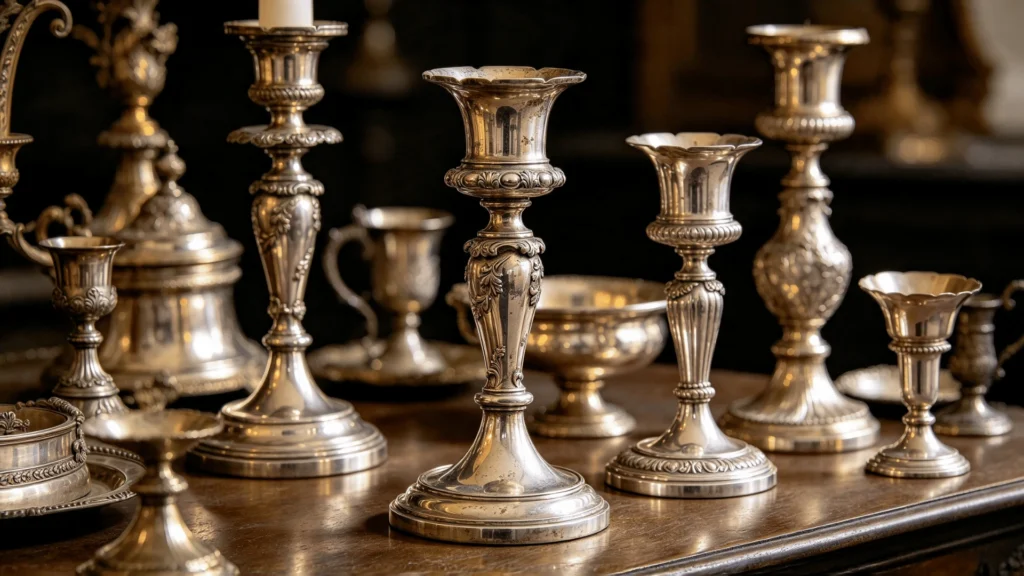
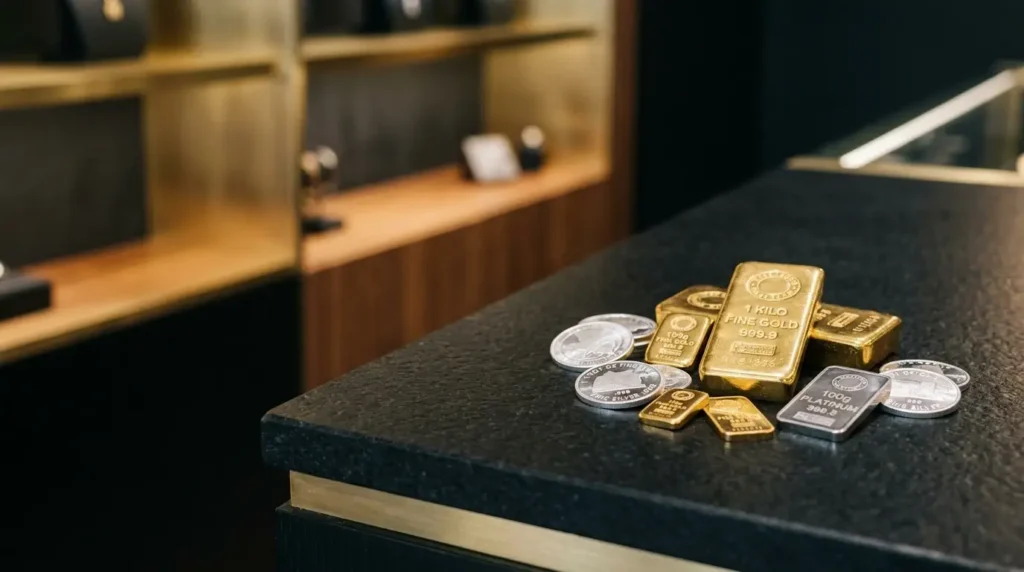
Precious Metal Buyers ยท Houston, TX Precious Metal Buyer in Houston: 7 Things Hiding in Your House That Are Worth Real Money Most people sell the obvious gold ring and leave the rest in the drawer. Here is what a Houston buyer actually weighs, tests, and pays for. Almost everyone looking for a precious metal buyer in Houston starts with the same thought: a broken chain, an old class ring, maybe a coin their grandfather kept in a cigar box. Then they get to the counter and find out the tarnished flatware, the bent bracelet, the dental crown in the envelope, and the little “950 PLAT” band from a divorce twenty years ago all carry weight too. Precious metals are paid on what they are made of, not on how pretty they look, and that changes what belongs in the bag you bring in. This guide walks through the four metals we buy, how purity is measured, how a fair offer gets calculated, and what to bring to your precious metal appraisal. Quick Answer A precious metal buyer pays based on three things: which metal it is (gold, silver, platinum, or palladium), how pure that metal is (karat or fineness stamp, verified by testing), and how much it weighs in troy ounces or grams. Condition does not matter for scrap value. Broken, tangled, tarnished, and mismatched items are all paid at full metal value, and the only way to know your exact number is to have the pieces weighed and tested in front of you. The Four Metals Gold, Silver, Platinum, and Palladium: What Each One Is Worth to a Buyer Gold is the one everyone knows. It never rusts or tarnishes, which is why a 14k chain buried in a jewelry box since 1998 comes out looking about the same as the day it went in. Karat marks tell you the purity: 24k is 99.9% pure, 18k is 75%, 14k is 58.3%, and 10k is 41.7%, the legal minimum to be called gold in the United States. Silver shows up in more places than people expect. Sterling is stamped 925, meaning 92.5% silver, and it appears on flatware, tea services, trays, picture frames, belt buckles, and older jewelry. Tarnish is only surface oxidation and costs you nothing at the scale. Platinum is denser than gold and usually stamped PLAT, PT950, or 950. A platinum band feels noticeably heavier in the hand than a white gold one of the same size. Palladium, stamped PD500 or PD950, turned up in wedding bands during the 2000s and still carries real industrial demand. Read Your Stamps How to Read the Purity Marks on Your Own Items Before you go anywhere, grab a magnifying glass and look at the clasp of a chain, the inside of a ring band, or the back of a spoon handle. Almost every legitimate precious metal item carries a tiny stamp. Here is what the common ones mean. Stamp Metal Purity 24k / 999 Gold 99.9% pure 22k / 916 Gold 91.6% pure 18k / 750 Gold 75% pure 14k / 585 Gold 58.3% pure 10k / 417 Gold 41.7% pure 925 / Sterling Silver 92.5% pure PLAT / PT950 Platinum 95% pure PD950 Palladium 95% pure GP, GF, HGE, 1/20 12k Plated or filled Base metal with a thin layer, minimal scrap value That last row is the one that disappoints people. GP means gold plated, GF means gold filled, and HGE means heavy gold electroplate. These have a microscopic amount of real gold bonded to brass or steel, and recovering it costs more than it returns. A reputable buyer will tell you that on the spot rather than quietly folding worthless pieces into a lump offer. “Precious metal does not care what shape it is in. A snapped chain and a perfect one of the same weight and karat are worth exactly the same at the scale.” The Math Behind Your Offer How a Precious Metal Buyer Calculates What to Pay You There is no mystery to it, and any buyer who treats the calculation as a trade secret is telling you something. The formula is weight, times purity, times the current market price of that metal, minus a refining and operating margin. Two details trip people up. First, precious metals are priced by the troy ounce, which is about 31.1 grams, not the 28.35 grams of the kitchen ounce you are used to. Second, the “spot price” you see quoted on a financial site is the price for pure, refined, wholesale-quantity bullion, not for a mixed bag of 10k and 14k jewelry that still has to be melted, assayed, and separated. The benchmark itself comes from the twice-daily auction run by the London Bullion Market Association, and it moves every single day, which is why an offer quoted to you last month is not the offer you get today. So if you bring in 20 grams of 14k gold, the buyer is working with roughly 11.7 grams of actual gold content (20 x 0.583), then applying that day’s market rate and a margin. Ask to see the scale reading and the karat test. At a transparent shop you should be able to watch every step of it happen. Worth Knowing Did You Know? Five Facts About Precious Metals Some context for the metal sitting in your dresser drawer right now. 01 All the Gold Ever Mined Would Fit in a Small Building Every ounce of gold pulled out of the earth in human history, melted together, would form a cube roughly 22 meters on each side. That is the entire global supply, and it is why the metal holds value the way it does. 02 Platinum Is Far Rarer Than Gold Annual global platinum production is a small fraction of gold’s, and the vast majority of it comes from just two countries: South Africa and Russia. Scarcity is baked into every platinum band ever made. 03 Silver Conducts Electricity Better Than Anything Else No element

Selling Loose Diamonds
Diamonds & Gemstones, Selling Guides

Selling Loose Diamonds: 2026 Complete Guide

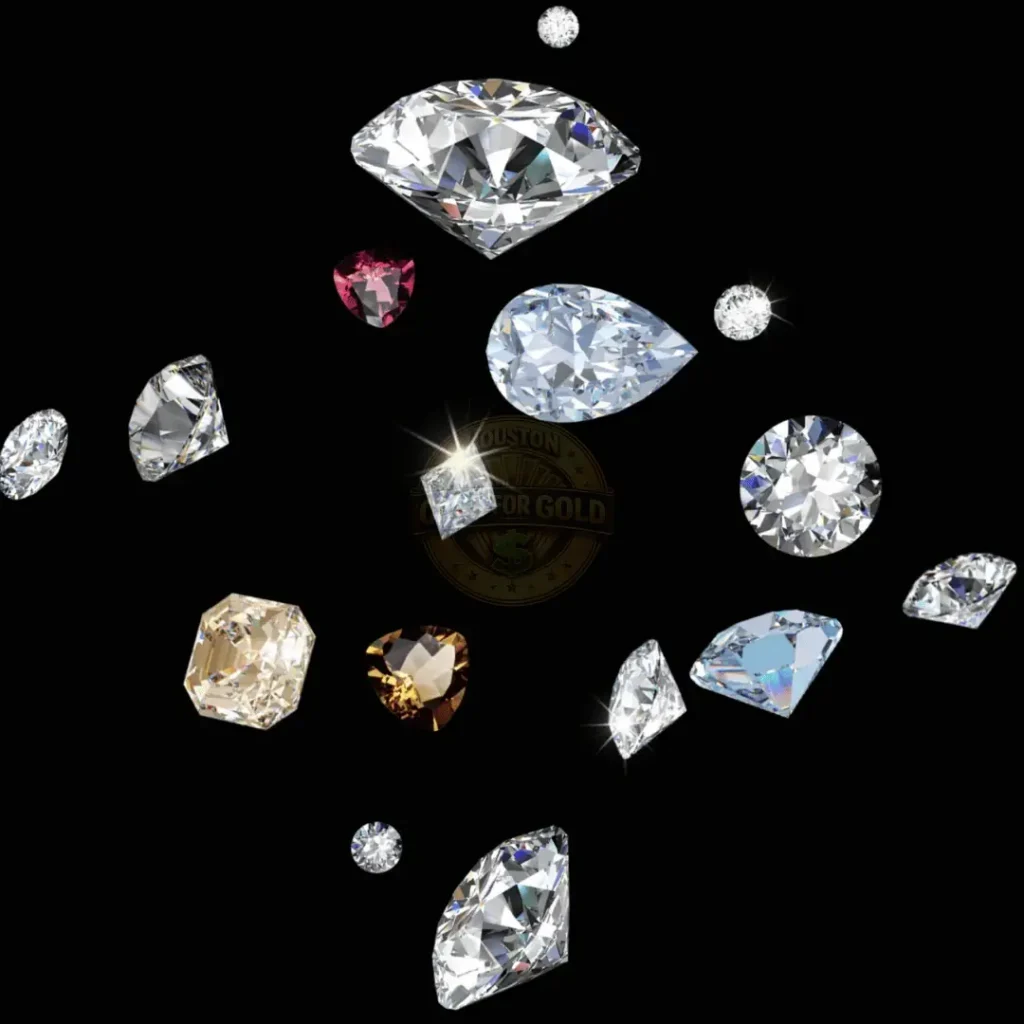
Selling Loose Diamonds in Houston: The Complete 2026 Guide Houston Cash for Gold · Diamond Guide Selling Loose Diamonds in Houston: The Complete 2026 Guide Everything you need to know before you sell an unset stone, from how the 4Cs set your price to getting same-day cash without the lowball. Updated June 2026 · 7 min read A loose diamond is one of the few valuable things people keep in a drawer and forget. Maybe it came out of an old setting, arrived through an inheritance, or was left over from a custom ring. Whatever the story, you do not need a finished piece of jewelry to sell it. This guide walks you through how loose diamonds are valued, how to spot a fair offer, and how to turn a single stone into cash in Houston. Why People Sell Loose Diamonds Loose stones show up for all kinds of reasons, and almost none of them have to do with the diamond losing value. The most common situations we see: A reset or upgrade: a jeweler removed the original stone and it never went back into anything. Inheritance: a relative left behind diamonds with no paperwork and no setting. A canceled engagement: the ring was returned or melted down, leaving the center stone. Leftover melee: small accent diamonds from a custom project or repair. In every case the question is the same: where do you sell it, and how do you know the number is fair? 4 CsGraded in front of you $0Cost to appraise Same dayCash payout Any sizeMelee to center stones How a Loose Diamond’s Value Is Set Diamond pricing is not guesswork. It comes down to the 4Cs, the global grading standard created by the Gemological Institute of America. Understanding them puts you on equal footing with any buyer. Every stone is graded on carat, cut, color, and clarity before an offer is made. Each of the four factors pulls on the final price. Open any one below for a plain-English breakdown: Carat (weight) Carat measures the diamond’s weight, not its size in millimeters. Larger stones are rarer, so the price per carat rises sharply as weight climbs. A single 2-carat stone is usually worth far more than two 1-carat stones of equal quality. Cut (light performance) Cut is how well the diamond is proportioned and polished. It is the biggest driver of sparkle. An excellent cut returns more light and commands a premium over a poorly cut stone of the same weight, color, and clarity. Color (how colorless) Diamonds are graded from D (completely colorless) down the alphabet toward light yellow or brown. The closer to colorless, the higher the value, with the exception of true fancy colored diamonds, which follow their own market. Clarity (inclusions) Clarity grades the number and visibility of internal inclusions and surface blemishes. Cleaner stones are rarer and worth more. Many inclusions are invisible without magnification but still affect the grade and the price. Want the official source? The GIA explains the grading system in detail in its guide to the 4Cs of diamond quality. It is a great primer before you sell. Certified vs Uncertified Loose Diamonds A grading report from a respected lab such as GIA or IGI gives a buyer independent confirmation of the 4Cs, which usually supports a stronger and faster offer. But a certificate is not required to sell. A good buyer grades uncertified stones on site, in front of you, and explains exactly how they reached the number. If you do have paperwork, a prior appraisal, or an original receipt, bring it. Documentation speeds up the process and removes doubt. What Larger and Specialty Stones Are Worth Bigger stones are not just scaled-up prices. Above roughly one carat, demand, certification, and cut quality matter even more because the resale market is more selective. Matched pairs and fancy shapes can also move at different speeds than a classic round brilliant, which is the most liquid shape on the market. Large and high-clarity stones are evaluated against current certified-diamond demand. How to Avoid a Lowball Offer The single best protection is knowing what you hold and dealing with a transparent buyer. A few rules keep you safe: Watch the grading. A trustworthy buyer tests in your presence and explains each grade. Get more than one quote. Honest buyers welcome comparison. Do not over-clean the stone. A gentle rinse is fine; harsh chemicals are not needed. Know your rights. The U.S. Federal Trade Commission publishes consumer guidance on jewelry and diamonds that is worth a read before any sale. Quick tip: Selling outright gives you the most cash if you do not plan to keep the stone. If you want money now but hope to reclaim the diamond later, ask about a collateral loan instead. Both start with the same free appraisal. Ready to Sell? Talk to Houston’s Loose Diamond Specialists Bring your stones to Houston Cash For Gold for a free, no-obligation evaluation and a same-day cash offer. See our full service page for details, locations, and what we buy. View Our Loose Diamond Service Call (832) 295-9155 Diamonds Still Set in a Ring? If your stone is mounted, you have options. We buy the complete piece, the diamond, and the precious metal setting. Often it makes sense to sell the ring whole rather than paying to have the stone removed first. Either way, the appraisal is free and the choice is yours. Mounted or loose, we evaluate the diamond and the setting together. Smart Selling Starts With the Right Questions Before you hand over any diamond, ask how the offer was calculated, whether testing is done in front of you, and if there is any obligation to sell. A good buyer answers all three without hesitation. Frequently Asked Questions Where can I sell a loose diamond in Houston? At Houston Cash For Gold. Our gemologists grade your stone on site, give you a free appraisal, and pay cash the same day if you choose to sell.

Speak To A Jeweler