
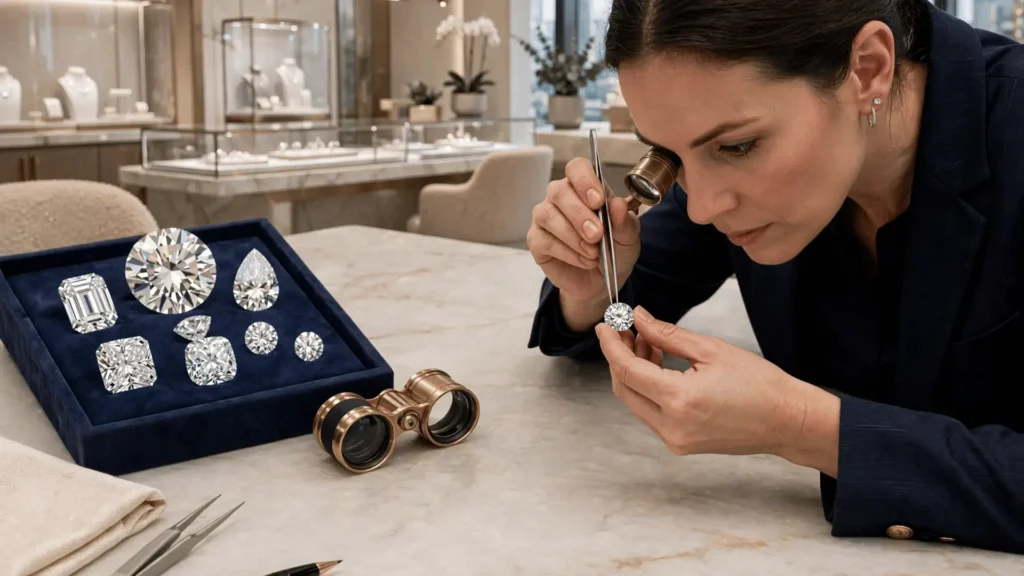
Emerald Jewelry Buyer in Houston: How Much Is Your Emerald Really Worth?
Gemstone Jewelry Buyers · Houston, TX Emerald Jewelry Buyer in Houston: How Much Is Your Emerald Really Worth? A local buyer’s plain-English guide to emerald value, the 4,000-year history behind the stone, and how to get a fair same-day cash offer. If you’re searching for an emerald jewelry buyer in Houston, you’ve probably already noticed that emeralds don’t get valued the same way gold or diamonds do. A ring, pendant, or pair of earrings set with emeralds can be worth anywhere from a modest sum to several thousand dollars, and the difference almost always comes down to a handful of factors most sellers have never had explained to them. Before you take your emerald jewelry anywhere, it helps to understand what a qualified buyer is actually looking at when they set your offer, and what to bring so your appraisal goes smoothly. Quick Answer Emerald value comes down to color first, then clarity, cut, and carat weight. A vivid, medium-toned green stone with good transparency will consistently outsell a pale or heavily included one of the same size, and visible inclusions are normal, not a defect. The only way to know your exact number is a free, in-person appraisal. Emerald Valuation What Determines the Value of Your Emerald Jewelry Like diamonds, emeralds are evaluated on color, clarity, cut, and carat weight, but the order of importance flips. Color comes first. The most desirable emeralds show a vivid, bluish-green to pure green hue with medium-to-dark tone; pale or overly dark stones are worth noticeably less per carat. Clarity is judged differently too. According to the GIA’s emerald quality factors, the trade expects eye-visible inclusions in emeralds and generally accepts them, since they’re proof the stone is natural. An emerald with zero inclusions is actually a red flag for synthetic or imitation material. What does hurt value is when those inclusions reach the surface and compromise transparency or structural stability. Size & Origin Carat Weight and Colombian Origin Matter More Than You’d Think Quality-for-quality, an emerald’s price per carat climbs sharply as the stone gets larger: a well-cut, vividly colored two-carat emerald is worth far more than double a one-carat stone of the same quality. That said, buyers consistently say it’s better to own a smaller emerald with excellent color than a larger one that looks washed out or overly dark. Origin plays a role too. Colombian emeralds, particularly those historically linked to the Muzo and Chivor mining regions, tend to command a premium for their saturated color, though fine emeralds are also mined in Zambia and Brazil. If your jewelry came with a certificate noting origin, bring it. It can meaningfully change the offer. “An emerald without inclusions isn’t rarer. It’s rarely real. The jardin inside your stone is part of its story, not a flaw to apologize for.” A Stone With History Did You Know? Five Curious Facts About Emeralds Before it was a family heirloom, your emerald had thousands of years of history behind it. 01 Cleopatra’s Mines Egypt’s oldest known emerald mines near the Red Sea were worked as far back as 1500 BCE, and legend holds that Cleopatra prized emeralds above every other gem in her collection. 02 The “Jardin” Jewelers call an emerald’s internal inclusions its jardin, French for garden, because the delicate, moss-like patterns inside genuinely look like tangled greenery under magnification. 03 May’s Birthstone Emerald has marked the month of May since at least ancient Rome, worn as a symbol of rebirth, renewal, and the arrival of spring. 04 Sacred Long Before Spain Arrived Centuries before European traders reached South America, the Muzo people of what is now Colombia mined and revered emeralds as sacred stones tied to their gods. 05 Rarer Than a Flawless Diamond A truly flawless, untreated emerald is dramatically rarer than a flawless diamond of the same size. That scarcity is exactly why exceptional, untreated stones can outprice diamonds per carat at auction. Condition & Care Durability: Why Emeralds Need Gentler Handling Than Diamonds Emeralds rank 7.5 to 8 on the Mohs hardness scale, which sounds tough, but hardness only measures resistance to scratching, not resistance to breaking. Because most emeralds carry natural internal fractures, their overall toughness is only fair to good, meaning they chip more easily than a diamond, ruby, or sapphire of similar hardness. Most emeralds on the market have also been clarity-enhanced with oil or resin to fill surface-reaching fractures and improve transparency. This is standard industry practice and doesn’t automatically devalue a stone, but heavy treatment does affect price, and heat, ultrasonic cleaners, and harsh chemicals can degrade the fillers over time. If you’re not sure how your piece has been treated or cared for, don’t attempt to clean it yourself before an appraisal. Let the buyer inspect it as-is. Before You Visit 5 Things to Know Before Selling Emerald Jewelry in Houston A little preparation makes the appraisal faster and your offer easier to trust. 01 Bring a Valid Photo ID Texas requires a government-issued ID for any precious item purchase, so have your driver’s license or passport ready. 02 Bring Any Paperwork GIA reports, appraisals, or original receipts help support a stronger offer, especially for larger or certified stones. 03 Loose or Set: Both Work Whether your emerald is mounted in a ring, pendant, or earrings, or sitting loose in a drawer, it can still be appraised and purchased. 04 No Appointment Needed Walk-ins are always welcome. Most evaluations take just 10 to 15 minutes from start to offer. 05 Watch the Appraisal Happen A trustworthy buyer evaluates your emerald jewelry in front of you on certified scales, never in a back room. If a buyer won’t let you watch, that’s a reason to walk away. Ready to Find Out What Your Emerald Jewelry Is Worth? At Houston Cash For Gold, our gemstone specialists evaluate emerald rings, pendants, earrings, and loose stones the same transparent way, right in front of you, with no appointment and no obligation. We factor in color, clarity,
