Houston Cash for Gold

Author name: Alexis Suza

How to Sell Chrome Hearts Jewelry: Spot a Fake, Know the Resale Value, and Get Paid in Houston
Designer Jewelry, Selling Guides

How to Sell Chrome Hearts Jewelry: Spot a Fake, Know the Resale Value, and Get Paid in Houston

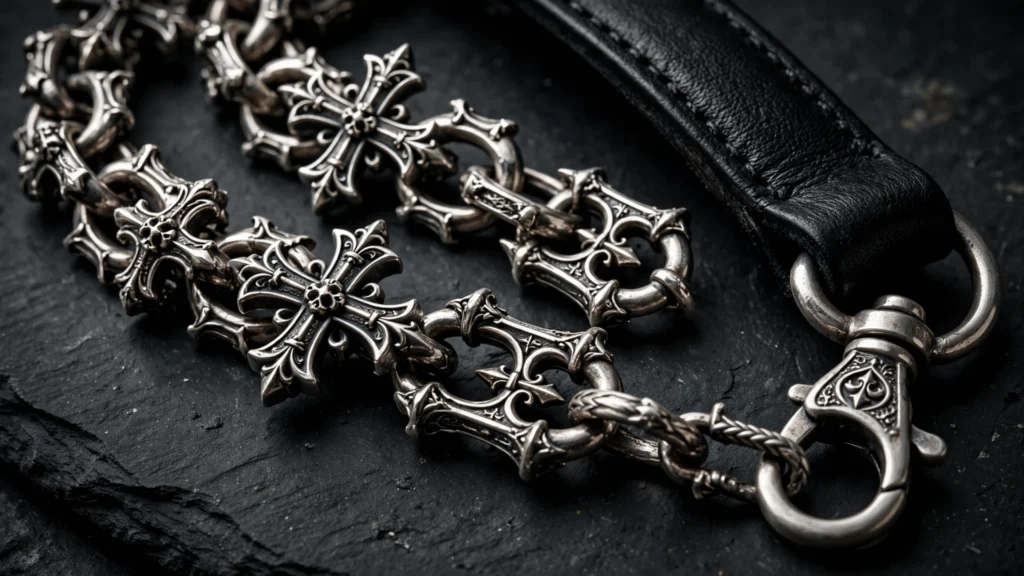
Home Services Sell Chrome Hearts Free Appraisal · Same-Day Cash Sell Chrome Hearts in Houston, TX Rings, cross pendants, chains, and 22K gold pieces, authenticated, tested, and weighed right in front of you in the Heights. One clear offer, paid the same visit. Call (832) 295-9155 Free Online Appraisal Free, no obligation Authenticated in front of you Paid the same day Walk-ins welcome The short answer To sell Chrome Hearts in Houston, bring it to Houston Cash For Gold at 1801 Durham Drive Suite 9 in the Heights, a short drive from downtown, Montrose, and the Galleria. As a Chrome Hearts buyer in Houston, we buy Chrome Hearts rings, cross and dagger pendants, chains, bracelets, earrings, and 22K gold pieces in any condition. Every piece gets a free appraisal: we check the stamps and finish, test the metal, and weigh it on a certified scale in front of you, then make one offer based on authenticity, model, condition, metal content, and current resale demand. Accept it and you are paid the same day. Call (832) 295-9155. What we buy Chrome Hearts Pieces We Buy in Houston Brand new or worn every day for years. If it is authentic Chrome Hearts, it has a market. Chrome Hearts Rings Floral Cross, Keeper, Spacer, Scroll Band, Cemetery, and Forever rings in any size. Cross & Dagger Pendants Cross pendants, dagger pendants, and charms, with or without the chain. Chains & Necklaces Paper chain, ball chain, and fancy link necklaces in sterling silver. Bracelets ID bracelets, link bracelets, and cuffs, including clasps with the CH logo. Earrings & Studs CH Plus studs, cross studs, and hoops, single earrings included. 22K Gold Pieces Chrome Hearts rings, pendants, and chains made in 22K gold. Diamond & Pave Pieces Silver and gold Chrome Hearts set with factory diamonds. Worn, Broken & Engraved Scratched rings, snapped chains, and personalized pieces still have value. Stamps, finish, and weight are checked at the counter, where you can watch. How we price Chrome Hearts Sell Chrome Hearts Jewelry for More Than Melt Chrome Hearts is one of the few silver brands that resells well above its metal value. Whether you want to sell Chrome Hearts rings, a cross pendant, or a full stack of chains, we price the brand, not just the silver, and we show you how the number was built. That is what sets a dedicated Chrome Hearts buyer in Houston apart from a scrap counter. Authenticity first. Stamps, logo placement, engraving depth, and finish are checked together, never one sign alone. Metal test and weight. We confirm .925 sterling or 22K gold and weigh each piece on a certified scale. Model and size. Popular rings, crosses, and chains in common sizes bring the strongest offers. Condition and paperwork. Wear, damage, receipts, and packaging all move the final number. Authentication How We Tell Real Chrome Hearts From a Replica Chrome Hearts is one of the most copied jewelry brands in the world, so a logo is not enough. Purity marks also have to be honest: under the FTC Guides for the Jewelry Industry, a piece marked sterling or 925 must be at least 92.5% silver, and a karat mark must match the gold inside. What we check Authentic pieces show Common red flags Stamps Clean, deep Chrome Hearts or CH marks with 925 or 22K Shallow, crooked, or misspelled stamps Weight Solid, heavy feel for the size Light or hollow pieces Detail and finish Sharp edges, crisp crosses, even dark oxidation Soft, blurry, cast looking detail Metal test Passes as sterling silver or 22K gold Magnetic, plated, or brass under the surface Paperwork A store receipt that matches the piece A box or pouch with no receipt (they are copied too) The floor under every offer: a 20 gram sterling ring holds 20 × 0.925 = 18.5 grams of pure silver, which is 18.5 ÷ 31.1 = about 0.59 troy ounces. Multiply by the day’s silver spot price and you have the melt value. On authentic Chrome Hearts, that melt value is only the starting point. The brand premium usually adds far more. Gold and diamond pieces are priced on metal, stones, and brand together. Gold and diamonds Chrome Hearts 22K Gold and Diamond Pieces Most Chrome Hearts is sterling silver, but the brand also makes rings, pendants, and chains in 22K gold, some set with diamonds. Those pieces carry real gold value on top of the brand premium, so they are weighed and tested separately. Metal or stone Purity How we price it .925 sterling silver 92.5% Silver weight plus brand premium 22K gold 91.6% Gold weight plus brand premium Factory diamonds Varies Checked for size and quality, added to the offer Selling plain sterling or gold alongside your Chrome Hearts? See our silver buyer in Houston page. 1988Year Chrome Hearts was founded in Los Angeles 92.5%Silver in Chrome Hearts .925 sterling 91.6%Gold in Chrome Hearts 22K pieces $0Cost to authenticate and appraise Our process How Selling Chrome Hearts Works Here One visit, start to finish. Every step happens where you can see it. 1 Walk In Bring your pieces, any receipts, and a photo ID. 2 Authenticate We check stamps, detail, and finish on every piece. 3 Test and Weigh Metal is confirmed and weighed on a certified scale. 4 One Clear Offer A single number, with the reasoning behind it. 5 Get Paid Accept and you are paid the same day. Or walk away free. Replicas can look right from across the room. Up close, the detail gives them away. What people misjudge Gifts, Resale Finds, and Replicas: Know What You Have A lot of Chrome Hearts changes hands as gifts or second hand purchases, and the owner never finds out if it is real until they try to sell it. The most common surprise is a piece that looks perfect in photos but has soft engraving, the wrong weight, or a plated finish wearing through to brass. We tell you straight what we find.
Silver Eagles vs Silver Bars: Which Sells for More in Houston?
Silver

Silver Eagles vs Silver Bars: Which Sells for More in Houston?

.sb{ –gold: #c9a227; –gold-lt: #e6c65c; –accent: #3f4a52; –accent-lt: #6d7b86; –accent-dk: #212a31; –charcoal: #14171a; –ink: #1c1c1a; –muted: #6b6f6b; –rule: #e2e6e0; –bg: #fbfaf7; font-family:’DM Sans’,sans-serif; color:var(–ink); background:var(–bg); line-height:1.65; -webkit-font-smoothing:antialiased; overflow-x:hidden; } .sb *{box-sizing:border-box;} .sb h1,.sb h2,.sb h3{font-family:’Playfair Display’,serif;font-weight:600;margin:0;color:var(–ink);} .sb h1{font-size:clamp(2.1rem,4.6vw,3.3rem);line-height:1.12;} .sb h2{font-size:clamp(1.6rem,3.2vw,2.3rem);line-height:1.2;} .sb h3{font-size:1.2rem;line-height:1.35;} .sb p{margin:0 0 1.1em;color:var(–ink);} .sb a{color:var(–accent-dk);} .sb .sb-eyebrow{ text-transform:uppercase;letter-spacing:.16em;font-size:.75rem;font-weight:700; color:var(–gold-lt);margin-bottom:1.1rem;display:block; } /* ———- HERO (CSS background = reliable fallback if the image can’t load) ———- */ .sb-hero{ position:relative;min-height:88vh;display:flex;align-items:center;justify-content:center; text-align:center;overflow:hidden; background: linear-gradient(180deg, rgba(8,10,9,.5) 0%, rgba(6,8,7,.6) 40%, rgba(5,7,6,.92) 100%), radial-gradient(ellipse at 50% 25%, #3a444c 0%, #1c2328 55%, #14171a 100%); background-size:cover;background-position:center; } .sb-hero-bg{ position:absolute;inset:0;width:100%;height:100%;object-fit:cover;object-position:center 30%; z-index:0;opacity:.9; } .sb-hero-overlay{ position:absolute;inset:0;z-index:1; background: linear-gradient(180deg, rgba(10,12,10,.5) 0%, rgba(8,10,9,.52) 38%, rgba(6,8,7,.86) 78%, rgba(5,7,6,.96) 100%); } .sb-hero-inner{position:relative;z-index:2;max-width:800px;padding:0 1.5rem;} .sb-hero h1{color:#fff;} .sb-hero p.sb-lead{ color:rgba(255,255,255,.88);font-size:1.15rem;max-width:620px;margin:1.3rem auto 0;font-weight:400; } .sb-hero .sb-eyebrow{color:var(–gold-lt);} .sb-scroll-cue{ position:absolute;bottom:2rem;left:50%;transform:translateX(-50%);z-index:2; width:22px;height:36px;border:2px solid rgba(255,255,255,.55);border-radius:14px; } .sb-scroll-cue::before{ content:”;position:absolute;top:6px;left:50%;transform:translateX(-50%); width:4px;height:8px;border-radius:2px;background:var(–gold-lt); animation:sbScroll 1.8s infinite; } @keyframes sbScroll{0%{opacity:1;top:6px;}70%{opacity:0;top:18px;}100%{opacity:0;top:6px;}} /* ———- GENERIC SECTION ———- */ .sb-section{max-width:760px;margin:0 auto;padding:4rem 1.5rem;border-top:1px solid var(–rule);} .sb-section:first-of-type{border-top:none;} .sb-section h2{margin-bottom:1.1rem;} .sb-kicker{color:var(–accent-dk);font-weight:700;text-transform:uppercase;letter-spacing:.12em;font-size:.72rem;margin-bottom:.6rem;display:block;} /* ———- KEY TAKEAWAY (answer-engine quotable block) ———- */ .sb-key{max-width:760px;margin:2.4rem auto 0;padding:1.5rem 1.8rem;background:#fff;border:1px solid var(–rule);border-left:4px solid var(–accent);border-radius:6px;} .sb-key-label{font-size:.72rem;letter-spacing:.14em;text-transform:uppercase;color:var(–accent-dk);font-weight:700;margin-bottom:.5rem;} .sb-key p{margin:0;font-size:1.05rem;line-height:1.65;} /* ———- SPLIT SECTION ———- */ .sb-split{max-width:1100px;margin:0 auto;padding:4.2rem 1.5rem;display:grid;grid-template-columns:1fr 1fr;gap:3.2rem;align-items:center;border-top:1px solid var(–rule);} .sb-split.sb-flip{direction:rtl;} .sb-split.sb-flip > *{direction:ltr;} .sb-img-frame{position:relative;border-radius:6px;overflow:hidden;min-height:260px; background:radial-gradient(ellipse at 30% 20%, #3a444c 0%, #1c2328 60%, #14171a 100%); box-shadow:0 18px 40px -18px rgba(0,0,0,.35);} .sb-img-frame img{width:100%;height:100%;object-fit:cover;display:block;min-height:260px;} .sb-split .sb-text h2{margin-bottom:1rem;} @media (max-width:760px){.sb-split{grid-template-columns:1fr;}.sb-split.sb-flip{direction:ltr;}} /* ———- IMAGE BREAK ———- */ .sb-break{position:relative;height:420px;overflow:hidden;margin:0 auto; background:radial-gradient(ellipse at 50% 30%, #3a444c 0%, #1c2328 60%, #14171a 100%);} .sb-break img{width:100%;height:100%;object-fit:cover;display:block;} .sb-break::after{content:”;position:absolute;inset:0;background:linear-gradient(180deg,rgba(5,7,6,.15),rgba(5,7,6,.72));} .sb-break-quote{ position:absolute;inset:0;display:flex;align-items:center;justify-content:center;text-align:center;z-index:2;padding:1.5rem; } .sb-break-quote p{ font-family:’Playfair Display’,serif;font-style:italic;color:#fff;font-size:clamp(1.2rem,2.6vw,1.7rem); max-width:720px;margin:0;line-height:1.4; } /* ———- FACTS / TIPS GRID (shared card pattern) ———- */ .sb-grid-wrap{max-width:1100px;margin:0 auto;padding:4.2rem 1.5rem;border-top:1px solid var(–rule);} .sb-grid-wrap > .sb-kicker,.sb-grid-wrap > h2,.sb-grid-wrap > .sb-sub{max-width:760px;margin-left:auto;margin-right:auto;text-align:center;} .sb-grid-wrap > h2{margin-bottom:.6rem;} .sb p.sb-sub{color:var(–muted);margin-bottom:2.4rem;} .sb-cards{display:grid;grid-template-columns:1fr 1fr;gap:1.6rem;margin-top:2rem;} .sb-card{background:#fff;border:1px solid var(–rule);border-radius:10px;padding:1.8rem 1.7rem;} .sb-card-num{font-family:’Playfair Display’,serif;font-size:2.1rem;color:var(–gold);opacity:.85;line-height:1;margin-bottom:.6rem;} .sb-card h3{margin-bottom:.5rem;} .sb .sb-card p{color:var(–muted);font-size:.95rem;margin:0;} @media (max-width:640px){.sb-cards{grid-template-columns:1fr;}} /* ———- FAQ ———- */ .sb-faq-wrap{max-width:760px;margin:0 auto;padding:4.2rem 1.5rem;border-top:1px solid var(–rule);} .sb-faq-wrap h2{margin-bottom:.5rem;} .sb p.sb-faq-sub{color:var(–muted);margin-bottom:2.2rem;} .sb-faq-item{border-bottom:1px solid var(–rule);} .sb-faq-q{ width:100%;text-align:left;background:none;border:none;cursor:pointer; display:flex;justify-content:space-between;align-items:center;gap:1rem; padding:1.3rem 0;font-family:’DM Sans’,sans-serif;font-weight:600;font-size:1.02rem;color:var(–ink); } .sb-faq-icon{flex:none;width:26px;height:26px;border-radius:50%;border:1.5px solid var(–accent); color:var(–accent-dk);display:flex;align-items:center;justify-content:center;font-size:1.1rem;transition:transform .3s ease;} .sb-faq-item.open .sb-faq-icon{transform:rotate(135deg);} .sb-faq-a{max-height:0;overflow:hidden;transition:max-height .35s ease;} .sb-faq-a p{color:var(–muted);padding-bottom:1.3rem;margin:0;font-size:.97rem;} /* ———- CTA ———- */ .sb-cta{ position:relative;background:var(–charcoal);padding:5.2rem 1.5rem;text-align:center;overflow:hidden; } .sb-cta::before{ content:”;position:absolute;inset:0; background:radial-gradient(circle at 50% 20%, rgba(160,176,188,.22) 0%, rgba(20,23,26,0) 60%); } .sb-cta-inner{position:relative;z-index:1;max-width:640px;margin:0 auto;} .sb-cta .sb-eyebrow{color:var(–gold-lt);} .sb-cta h2{color:#fff;margin-bottom:1rem;} .sb .sb-cta p{color:rgba(255,255,255,.8);max-width:520px;margin:0 auto 2rem;} .sb-cta-btns{display:flex;gap:1rem;justify-content:center;flex-wrap:wrap;} .sb-btn{ display:inline-block;padding:.95rem 2rem;border-radius:4px;font-weight:700; text-decoration:none !important;font-size:.95rem;letter-spacing:.02em;line-height:1.3; border:2px solid transparent;text-shadow:none; transition:transform .2s ease,background-color .2s ease,color .2s ease,border-color .2s ease; } .sb-btn:hover{transform:translateY(-2px);} .sb-btn:focus-visible{outline:3px solid var(–gold-lt);outline-offset:3px;} .sb-btn-primary{background:var(–gold) !important;color:#14171a !important;border-color:var(–gold) !important;} .sb-btn-primary:hover,.sb-btn-primary:focus{background:var(–gold-lt) !important;color:#14171a !important;border-color:var(–gold-lt) !important;} .sb-btn-ghost{background:rgba(255,255,255,.12) !important;color:#ffffff !important;border-color:#ffffff !important;} .sb-btn-ghost:hover,.sb-btn-ghost:focus{background:#ffffff !important;color:#14171a !important;border-color:#ffffff !important;} .sb-btn-dark{background:var(–charcoal) !important;color:#ffffff !important;border-color:var(–charcoal) !important;} .sb-btn-dark:hover,.sb-btn-dark:focus{background:var(–accent-dk) !important;color:#ffffff !important;border-color:var(–accent-dk) !important;} .sb-btn-outline-dark{background:#ffffff !important;color:#1c1c1a !important;border-color:#1c1c1a !important;} .sb-btn-outline-dark:hover,.sb-btn-outline-dark:focus{background:#1c1c1a !important;color:#ffffff !important;border-color:#1c1c1a !important;} .sb-cta-note{color:rgba(255,255,255,.72);font-size:.9rem;margin:1.6rem 0 0;} .sb-cta-note a{color:#e6c65c !important;text-decoration:none;font-weight:700;} @media (max-width:600px){ .sb-btn{display:block;width:100%;} } /* ———- INLINE SERVICE CTA ———- */ .sb-inline-cta{max-width:760px;margin:0 auto 1rem;padding:2.4rem 1.8rem;background:#fff;border:1px solid var(–rule);border-left:4px solid var(–gold);border-radius:8px;text-align:center;} .sb-inline-cta h3{margin-bottom:.5rem;} .sb .sb-inline-cta p{color:var(–muted);font-size:.97rem;margin:0 0 1.4rem;} .sb-inline-cta .sb-btn{margin:.3rem;} /* ———- COMPARISON TABLE ———- */ .sb-table-wrap{overflow-x:auto;margin:1.4rem 0 .6rem;border:1px solid var(–rule);border-radius:8px;background:#fff;} .sb-table{width:100%;border-collapse:collapse;font-size:.95rem;min-width:560px;} .sb-table th{background:var(–charcoal);color:#fff;text-align:left;padding:.8rem 1rem;font-weight:600;} .sb-table td{padding:.75rem 1rem;border-top:1px solid var(–rule);color:var(–ink);vertical-align:top;} .sb-table tbody tr:nth-child(even){background:#f6f7f5;} .sb-table-note{font-size:.88rem;color:var(–muted);} /* ———- SCROLL ANIM (progressive enhancement only) ———- Content is fully visible by default. The hidden/animated state is only switched on after JS confirms it can run and observe scroll, so the post never disappears in CMS previews, email clients, or any place that strips

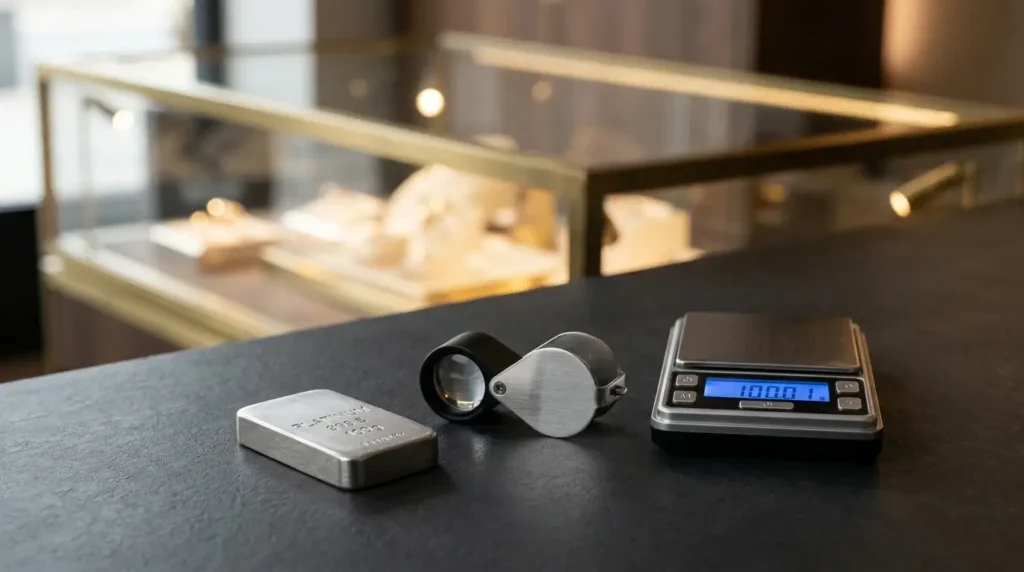
Platinum vs white gold: platinum bar, jeweler loupe and scale at Houston Cash for Gold
Platinum & Palladium

Is That Ring Platinum or White Gold? How to Tell in 30 Seconds

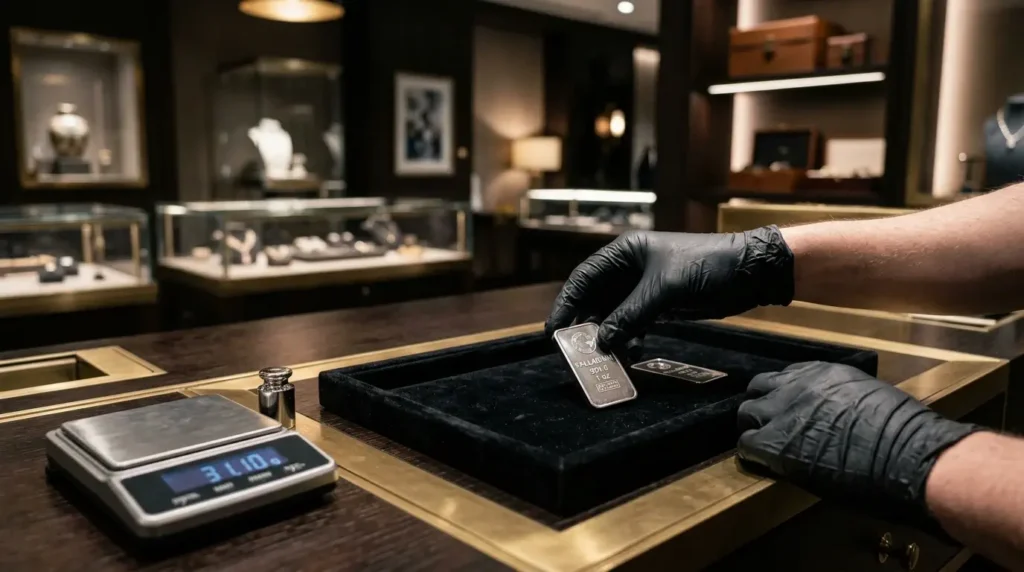
Platinum Buyers · Houston, TX Platinum Buyer in Houston: Is That Ring Platinum or White Gold? How to Tell in 30 Seconds They look identical in a jewelry box. One contains roughly 95% precious metal, the other about 58%. Here is how to spot the difference before you sell. The most common conversation a platinum buyer in Houston has starts with somebody sliding a plain white band across the counter and saying “I think this is white gold.” Roughly a third of the time, it isn’t. Platinum and white gold are nearly impossible to tell apart by eye, which is exactly why platinum gets undersold, traded in, or left in a drawer for decades. The good news is that the difference is easy to confirm yourself with a magnifying glass and your own two hands, and it matters a great deal, because a platinum ring typically contains around 95% pure precious metal while a 14k white gold ring contains about 58%. Quick Answer Platinum is stamped PLAT, PT950, PT900, or IRIDPLAT, feels noticeably heavier than a white gold ring of the same size, and stays white forever. White gold is stamped 14k, 18k, 585, or 750, weighs less, and is rhodium plated, so it slowly turns warm and yellowish at the back of the band as the plating wears. Platinum is usually 90% to 95% pure, which is why it is bought and paid for by weight and purity like any other precious metal. The 30-Second Test Four Ways to Tell Platinum From White Gold Without a Jeweler 1. Read the stamp. Look inside the band with a magnifying glass. Platinum says so: PLAT, PT, PT950, 950, PT900, or on older American rings, IRIDPLAT or 10% IRID PLAT. White gold uses karat marks instead: 14k, 585, 18k, 750. 2. Feel the weight. This is the test people trust once they try it. Platinum is one of the densest metals used in jewelry, considerably denser than gold alloys. Put a platinum band in one hand and a white gold band in the other and the platinum feels obviously, almost surprisingly heavy for its size. 3. Look at the back of the band. White gold is plated with rhodium to make it bright white. That plating wears off with daily contact, so a worn white gold ring shows a faint warm, yellowish or grey cast underneath, usually first on the underside. Platinum has no plating to lose. 4. Check the surface texture. Old platinum does not lose metal when it scratches, it displaces it, developing a soft satin finish jewelers call a patina. Old white gold looks dull and slightly yellow instead. Reference Chart What Every Platinum Stamp Means Platinum purity is written in parts per thousand, the same system used for silver. Anything at 850 or above is sold and taxed as platinum in the United States. Stamp Composition Where You See It PT999 / 999 PLAT 99.9% platinum Bullion bars and coins PLAT / PT950 / 950 95% platinum The US jewelry standard, most rings PT900 / 900 PLAT 90% platinum Common in Japanese and older pieces PT850 / 850 85% platinum Chains and lighter-weight jewelry IRIDPLAT / 10% IRID PLAT 90% platinum, 10% iridium American rings from roughly 1900 to 1950 PD500 / PD950 Palladium, not platinum 2000s wedding bands, still valuable 14k / 585 / 18k / 750 White gold Rhodium plated gold alloy WG, “White Gold” Gold alloy Not platinum, priced as gold If you find an IRIDPLAT stamp, pay attention. That mark dates a piece to the first half of the twentieth century, the height of the Art Deco era, when platinum was the metal of choice for fine engagement rings. Those pieces sometimes carry design and period value on top of their metal weight, so they deserve a proper look rather than a scrap-only quote. “A platinum ring does not wear away, it wears in. Every scratch it has collected is still there in the metal, and it all still weighs on the scale.” Why Platinum Is Different Rarer Than Gold, and Priced by a Market Most People Never See Annual global platinum production is a small fraction of annual gold production, and the supply is concentrated in a handful of countries, with South Africa accounting for the large majority. The USGS platinum-group metals statistics track how tight that supply chain really is. Here is the part that trips up sellers: scarcity does not automatically mean a higher price than gold. Platinum is an industrial metal as much as a jewelry metal, with heavy demand from automotive catalytic converters, chemical refining, and laboratory equipment, so its price responds to manufacturing cycles in ways gold does not. Platinum has traded both above and below gold at different points in recent history. Benchmark prices are set through the daily precious metal price auctions, and they move every day. What that means practically: do not assume your platinum is worth less than gold, and do not assume it is worth more. Have it weighed and priced on the day you sell. At the Counter How a Platinum Appraisal Actually Works in Houston The acid tests that work on gold are unreliable on platinum, because platinum resists almost every acid you can throw at it. That is why a serious buyer reaches for electronic or XRF analysis instead, which reads the actual composition of the alloy without cutting, filing, or damaging your piece. From there it is straightforward. The item goes on a certified scale, the purity from the test is applied, and the day’s market rate does the rest. If your piece holds diamonds or colored stones, those get evaluated separately and added on top, since the setting and the stones are two different kinds of value in the same object. Every step of that should happen where you can see it. Weight read out loud, purity stated, math shown. Anything less and you have no way to check the number you are being handed. See Exactly

Sell Antique Silver Jewelry in Houston Cash for Gold
Silver

Sell Antique Silver Jewelry in Houston

Home Services Antique Silver Jewelry Buyer Antique & Vintage Silver Buyer · Houston, TX Sell Antique Silver Jewelry in Houston Victorian lockets, Taxco bracelets, Navajo turquoise, Georg Jensen brooches, and whole estate boxes, valued for maker and age, not just weight. Paid the same visit. Call (832) 295-9155 Free Online Appraisal Hallmarks read for you Tested in front of you Paid the same day Walk-ins welcome The short answer You can sell antique silver jewelry in Houston at Houston Cash For Gold, 1801 Durham Drive Suite 9 in the Heights, near downtown, Montrose, and the Galleria. As an antique silver jewelry buyer, we purchase Victorian and Georgian pieces, Art Nouveau, Taxco and Mexican silver, Native American silver and turquoise, Scandinavian designer silver, and full estate lots in any condition. We read the hallmarks, identify the maker and period, and test and weigh every piece in front of you. Your offer covers the silver content plus any collector value, and you are paid the same day. Call (832) 295-9155. What we buy Antique and Vintage Silver Jewelry We Buy Signed or unsigned, tarnished or broken. Old silver is often worth more than it looks. Victorian & Georgian Lockets, mourning jewelry, bangles, and brooches with British hallmarks. Art Nouveau & Arts and Crafts Flowing, hand wrought pieces from around 1890 to 1920, signed or unsigned. Taxco & Mexican Silver Eagle marked and TS or TA coded pieces, from Spratling to Los Castillo. Native American Silver Navajo, Zuni, and Hopi silver with turquoise, coral, and stamped work. Scandinavian Designer Silver Georg Jensen and other Danish and Norwegian pieces marked 925, 830, or 830S. Lockets, Charms & Brooches Charm bracelets, cameo brooches, photo lockets, and sweetheart jewelry. Marcasite & Stone Set Silver Art Deco marcasite, garnet, amethyst, and paste set in sterling. Estate Lots & Broken Pieces Inherited jewelry boxes, single earrings, and damaged antiques, all sorted for you. Hallmarks, maker, and period are checked before the scale ever comes out. How we value antiques Antique Silver Jewelry Buyer in Houston: Collector Value First Searching for an antique jewelry buyer near me usually starts with one worry: will they just weigh it and melt it? Not here. Melt value is only the floor. We look for everything that can push an old piece above its silver before we ever quote. Hallmarks and maker. We read the stamps and identify the silversmith, workshop, or retailer. Period and style. Georgian, Victorian, Art Nouveau, Art Deco, and mid century pieces each have their own market. Stones and craftsmanship. Natural turquoise, garnets, marcasite, and hand work all count. Silver content. Tested and weighed on a certified scale, so the floor is never in doubt. Read your marks Antique Silver Hallmarks and What They Tell You Old silver marks say more than purity. They can point to a country, a decade, and sometimes a maker. Check clasps, the backs of brooches, bangle interiors, and locket bails. For modern US pieces, the FTC Guides for the Jewelry Industry require at least 92.5% silver for anything sold as sterling. Mark Silver What it usually means Lion passant 92.5% British sterling, used since 1544, often with a town mark and date letter Sovereign’s head 92.5% British duty mark, struck between 1784 and 1890 800 with crescent and crown 80.0% German silver standard mark, used from 1888 830 or 830S 83.0% Scandinavian silver, common on older Danish and Norwegian pieces Eagle with a number 92.5% or more Mexican assay mark used from 1948 to 1980, the number identifies the workshop TS or TA code 92.5% Mexican registration codes used after 1980 Coin, Pure Coin, Standard About 90% Early American coin silver, mostly before the 1860s German silver, Alpaca, Nickel silver None Copper, nickel, and zinc alloys that contain no silver Floor vs ceiling: a 50 gram sterling bracelet holds 50 × 0.925 = 46.25 grams of pure silver, about 1.49 troy ounces. Multiply by the day’s silver price and that is its melt floor. If the same bracelet is a signed piece from a known Taxco workshop, collectors may pay well above that number, which is why we identify before we weigh. Signed and early pieces are priced as collectibles, not as scrap. Names that matter Vintage Silver Jewelry Buyer in Houston: Makers Worth More Some names change the math completely. Mexican silver from William Spratling, Los Castillo, Hector Aguilar, and other early Taxco workshops draws steady collector demand. So does Danish silver from Georg Jensen, American pieces from Tiffany & Co. and Unger Brothers, and signed Navajo, Zuni, and Hopi work with natural turquoise or coral. Unsigned does not mean worthless. Well made Victorian lockets, Art Deco marcasite, and hand wrought Arts and Crafts pieces still sell above melt. Have modern sterling too? We can price it in the same visit (see our sell silver jewelry in Houston page). 1544Year the British lion passant sterling mark began 1948Year Mexico’s eagle assay mark came into use 925Parts silver per 1,000 in sterling $0Cost of an appraisal, with no obligation Our process How Selling Antique Silver Works Here One visit, start to finish. Every step happens where you can see it. 1 Walk In Bring the pieces, any paperwork, and a photo ID. No appointment needed. 2 Identify We read hallmarks and look for the maker, period, and style. 3 Test and Weigh Metal tested and weighed on a certified scale in front of you. 4 One Clear Offer Silver value plus collector value, explained piece by piece. 5 Get Paid Accept and you are paid the same day. Or walk away free. Tarnish and patina are normal on antique silver. Bring it as is. Condition and cleaning Sell Estate Silver Jewelry in Houston Without Polishing It The dark patina in the recesses of old silver is part of what collectors want. Heavy polishing flattens that contrast, rounds off crisp detail, and wears away the hallmarks that prove age and origin. Dips and ultrasonic cleaners can also damage turquoise, pearls, and old glued

How to Tell If David Yurman Is Real
Designer Jewelry

How to Tell If David Yurman Is Real: 7 Signs a Buyer Checks

.sb{ –gold: #c9a227; –gold-lt: #e6c65c; –accent: #3f4a52; –accent-lt: #6d7b86; –accent-dk: #212a31; –charcoal: #14171a; –ink: #1c1c1a; –muted: #6b6f6b; –rule: #e2e6e0; –bg: #fbfaf7; font-family:’DM Sans’,sans-serif; color:var(–ink); background:var(–bg); line-height:1.65; -webkit-font-smoothing:antialiased; overflow-x:hidden; } .sb *{box-sizing:border-box;} .sb h1,.sb h2,.sb h3{font-family:’Playfair Display’,serif;font-weight:600;margin:0;color:var(–ink);} .sb h1{font-size:clamp(2.1rem,4.6vw,3.3rem);line-height:1.12;} .sb h2{font-size:clamp(1.6rem,3.2vw,2.3rem);line-height:1.2;} .sb h3{font-size:1.2rem;line-height:1.35;} .sb p{margin:0 0 1.1em;color:var(–ink);} .sb a{color:var(–accent-dk);} .sb .sb-eyebrow{ text-transform:uppercase;letter-spacing:.16em;font-size:.75rem;font-weight:700; color:var(–gold-lt);margin-bottom:1.1rem;display:block; } /* ———- HERO (CSS background = reliable fallback if the image can’t load) ———- */ .sb-hero{ position:relative;min-height:88vh;display:flex;align-items:center;justify-content:center; text-align:center;overflow:hidden; background: linear-gradient(180deg, rgba(8,10,9,.5) 0%, rgba(6,8,7,.6) 40%, rgba(5,7,6,.92) 100%), radial-gradient(ellipse at 50% 25%, #3a444c 0%, #1c2328 55%, #14171a 100%); background-size:cover;background-position:center; } .sb-hero-bg{ position:absolute;inset:0;width:100%;height:100%;object-fit:cover;object-position:center 30%; z-index:0;opacity:.9; } .sb-hero-overlay{ position:absolute;inset:0;z-index:1; background: linear-gradient(180deg, rgba(10,12,10,.5) 0%, rgba(8,10,9,.52) 38%, rgba(6,8,7,.86) 78%, rgba(5,7,6,.96) 100%); } .sb-hero-inner{position:relative;z-index:2;max-width:800px;padding:0 1.5rem;} .sb-hero h1{color:#fff;} .sb-hero p.sb-lead{ color:rgba(255,255,255,.88);font-size:1.15rem;max-width:620px;margin:1.3rem auto 0;font-weight:400; } .sb-hero .sb-eyebrow{color:var(–gold-lt);} .sb-scroll-cue{ position:absolute;bottom:2rem;left:50%;transform:translateX(-50%);z-index:2; width:22px;height:36px;border:2px solid rgba(255,255,255,.55);border-radius:14px; } .sb-scroll-cue::before{ content:”;position:absolute;top:6px;left:50%;transform:translateX(-50%); width:4px;height:8px;border-radius:2px;background:var(–gold-lt); animation:sbScroll 1.8s infinite; } @keyframes sbScroll{0%{opacity:1;top:6px;}70%{opacity:0;top:18px;}100%{opacity:0;top:6px;}} /* ———- GENERIC SECTION ———- */ .sb-section{max-width:760px;margin:0 auto;padding:4rem 1.5rem;border-top:1px solid var(–rule);} .sb-section:first-of-type{border-top:none;} .sb-section h2{margin-bottom:1.1rem;} .sb-kicker{color:var(–accent-dk);font-weight:700;text-transform:uppercase;letter-spacing:.12em;font-size:.72rem;margin-bottom:.6rem;display:block;} /* ———- KEY TAKEAWAY (answer-engine quotable block) ———- */ .sb-key{max-width:760px;margin:2.4rem auto 0;padding:1.5rem 1.8rem;background:#fff;border:1px solid var(–rule);border-left:4px solid var(–accent);border-radius:6px;} .sb-key-label{font-size:.72rem;letter-spacing:.14em;text-transform:uppercase;color:var(–accent-dk);font-weight:700;margin-bottom:.5rem;} .sb-key p{margin:0;font-size:1.05rem;line-height:1.65;} /* ———- SPLIT SECTION ———- */ .sb-split{max-width:1100px;margin:0 auto;padding:4.2rem 1.5rem;display:grid;grid-template-columns:1fr 1fr;gap:3.2rem;align-items:center;border-top:1px solid var(–rule);} .sb-split.sb-flip{direction:rtl;} .sb-split.sb-flip > *{direction:ltr;} .sb-img-frame{position:relative;border-radius:6px;overflow:hidden;min-height:260px; background:radial-gradient(ellipse at 30% 20%, #3a444c 0%, #1c2328 60%, #14171a 100%); box-shadow:0 18px 40px -18px rgba(0,0,0,.35);} .sb-img-frame img{width:100%;height:100%;object-fit:cover;display:block;min-height:260px;} .sb-split .sb-text h2{margin-bottom:1rem;} @media (max-width:760px){.sb-split{grid-template-columns:1fr;}.sb-split.sb-flip{direction:ltr;}} /* ———- IMAGE BREAK ———- */ .sb-break{position:relative;height:420px;overflow:hidden;margin:0 auto; background:radial-gradient(ellipse at 50% 30%, #3a444c 0%, #1c2328 60%, #14171a 100%);} .sb-break img{width:100%;height:100%;object-fit:cover;display:block;} .sb-break::after{content:”;position:absolute;inset:0;background:linear-gradient(180deg,rgba(5,7,6,.15),rgba(5,7,6,.72));} .sb-break-quote{ position:absolute;inset:0;display:flex;align-items:center;justify-content:center;text-align:center;z-index:2;padding:1.5rem; } .sb-break-quote p{ font-family:’Playfair Display’,serif;font-style:italic;color:#fff;font-size:clamp(1.2rem,2.6vw,1.7rem); max-width:720px;margin:0;line-height:1.4; } /* ———- FACTS / TIPS GRID (shared card pattern) ———- */ .sb-grid-wrap{max-width:1100px;margin:0 auto;padding:4.2rem 1.5rem;border-top:1px solid var(–rule);} .sb-grid-wrap > .sb-kicker,.sb-grid-wrap > h2,.sb-grid-wrap > .sb-sub{max-width:760px;margin-left:auto;margin-right:auto;text-align:center;} .sb-grid-wrap > h2{margin-bottom:.6rem;} .sb p.sb-sub{color:var(–muted);margin-bottom:2.4rem;} .sb-cards{display:grid;grid-template-columns:1fr 1fr;gap:1.6rem;margin-top:2rem;} .sb-card{background:#fff;border:1px solid var(–rule);border-radius:10px;padding:1.8rem 1.7rem;} .sb-card-num{font-family:’Playfair Display’,serif;font-size:2.1rem;color:var(–gold);opacity:.85;line-height:1;margin-bottom:.6rem;} .sb-card h3{margin-bottom:.5rem;} .sb .sb-card p{color:var(–muted);font-size:.95rem;margin:0;} @media (max-width:640px){.sb-cards{grid-template-columns:1fr;}} /* ———- FAQ ———- */ .sb-faq-wrap{max-width:760px;margin:0 auto;padding:4.2rem 1.5rem;border-top:1px solid var(–rule);} .sb-faq-wrap h2{margin-bottom:.5rem;} .sb p.sb-faq-sub{color:var(–muted);margin-bottom:2.2rem;} .sb-faq-item{border-bottom:1px solid var(–rule);} .sb-faq-q{ width:100%;text-align:left;background:none;border:none;cursor:pointer; display:flex;justify-content:space-between;align-items:center;gap:1rem; padding:1.3rem 0;font-family:’DM Sans’,sans-serif;font-weight:600;font-size:1.02rem;color:var(–ink); } .sb-faq-icon{flex:none;width:26px;height:26px;border-radius:50%;border:1.5px solid var(–accent); color:var(–accent-dk);display:flex;align-items:center;justify-content:center;font-size:1.1rem;transition:transform .3s ease;} .sb-faq-item.open .sb-faq-icon{transform:rotate(135deg);} .sb-faq-a{max-height:0;overflow:hidden;transition:max-height .35s ease;} .sb-faq-a p{color:var(–muted);padding-bottom:1.3rem;margin:0;font-size:.97rem;} /* ———- CTA ———- */ .sb-cta{ position:relative;background:var(–charcoal);padding:5.2rem 1.5rem;text-align:center;overflow:hidden; } .sb-cta::before{ content:”;position:absolute;inset:0; background:radial-gradient(circle at 50% 20%, rgba(160,176,188,.22) 0%, rgba(20,23,26,0) 60%); } .sb-cta-inner{position:relative;z-index:1;max-width:640px;margin:0 auto;} .sb-cta .sb-eyebrow{color:var(–gold-lt);} .sb-cta h2{color:#fff;margin-bottom:1rem;} .sb .sb-cta p{color:rgba(255,255,255,.8);max-width:520px;margin:0 auto 2rem;} .sb-cta-btns{display:flex;gap:1rem;justify-content:center;flex-wrap:wrap;} .sb-btn{ display:inline-block;padding:.95rem 2rem;border-radius:4px;font-weight:700; text-decoration:none !important;font-size:.95rem;letter-spacing:.02em;line-height:1.3; border:2px solid transparent;text-shadow:none; transition:transform .2s ease,background-color .2s ease,color .2s ease,border-color .2s ease; } .sb-btn:hover{transform:translateY(-2px);} .sb-btn:focus-visible{outline:3px solid var(–gold-lt);outline-offset:3px;} .sb-btn-primary{background:var(–gold) !important;color:#14171a !important;border-color:var(–gold) !important;} .sb-btn-primary:hover,.sb-btn-primary:focus{background:var(–gold-lt) !important;color:#14171a !important;border-color:var(–gold-lt) !important;} .sb-btn-ghost{background:rgba(255,255,255,.12) !important;color:#ffffff !important;border-color:#ffffff !important;} .sb-btn-ghost:hover,.sb-btn-ghost:focus{background:#ffffff !important;color:#14171a !important;border-color:#ffffff !important;} .sb-btn-dark{background:var(–charcoal) !important;color:#ffffff !important;border-color:var(–charcoal) !important;} .sb-btn-dark:hover,.sb-btn-dark:focus{background:var(–accent-dk) !important;color:#ffffff !important;border-color:var(–accent-dk) !important;} .sb-btn-outline-dark{background:#ffffff !important;color:#1c1c1a !important;border-color:#1c1c1a !important;} .sb-btn-outline-dark:hover,.sb-btn-outline-dark:focus{background:#1c1c1a !important;color:#ffffff !important;border-color:#1c1c1a !important;} .sb-cta-note{color:rgba(255,255,255,.72);font-size:.9rem;margin:1.6rem 0 0;} .sb-cta-note a{color:#e6c65c !important;text-decoration:none;font-weight:700;} @media (max-width:600px){ .sb-btn{display:block;width:100%;} } /* ———- INLINE SERVICE CTA ———- */ .sb-inline-cta{max-width:760px;margin:0 auto 1rem;padding:2.4rem 1.8rem;background:#fff;border:1px solid var(–rule);border-left:4px solid var(–gold);border-radius:8px;text-align:center;} .sb-inline-cta h3{margin-bottom:.5rem;} .sb .sb-inline-cta p{color:var(–muted);font-size:.97rem;margin:0 0 1.4rem;} .sb-inline-cta .sb-btn{margin:.3rem;} /* ———- COMPARISON TABLE ———- */ .sb-table-wrap{overflow-x:auto;margin:1.4rem 0 .6rem;border:1px solid var(–rule);border-radius:8px;background:#fff;} .sb-table{width:100%;border-collapse:collapse;font-size:.95rem;min-width:560px;} .sb-table th{background:var(–charcoal);color:#fff;text-align:left;padding:.8rem 1rem;font-weight:600;} .sb-table td{padding:.75rem 1rem;border-top:1px solid var(–rule);color:var(–ink);vertical-align:top;} .sb-table tbody tr:nth-child(even){background:#f6f7f5;} .sb-table-note{font-size:.88rem;color:var(–muted);} /* ———- SCROLL ANIM (progressive enhancement only) ———- Content is fully visible by default. The hidden/animated state is only switched on after JS confirms it can run and observe scroll, so the post never disappears in CMS previews, email clients, or any place that strips

Palladium Buyer in Houston
Platinum & Palladium

Palladium Buyer in Houston: The Precious Metal Most Sellers Don’t Know They Own

Palladium Buyers · Houston, TX Palladium Buyer in Houston: The Precious Metal Most Sellers Don’t Know They Own It looks like white gold, weighs less than platinum, and sits unrecognized in thousands of Houston jewelry boxes. Here is how to find yours. Of the four precious metals a palladium buyer in Houston handles, palladium is the one people cannot name. Gold everyone knows. Silver everyone knows. Platinum most people have at least heard of. Palladium gets called “the white one” or written off as stainless steel, which is a costly mistake, because it is a genuine platinum-group metal, jewelry-grade palladium is usually 95% pure, and it sells by weight exactly like the rest. If you got married between roughly 2004 and 2015, there is a real chance one of the bands in your drawer is palladium and you have never once thought of it as valuable. Quick Answer Palladium is stamped PD, PD500, PD950, 500Pd, or 950Pd. It is naturally white so it never needs rhodium plating, it does not tarnish, and it is noticeably lighter in the hand than platinum or gold of the same size. That surprising lightness is the giveaway: a white metal ring that feels too light to be platinum, with a PD mark inside, is palladium, and it carries real precious metal value. Identify It How to Recognize Palladium in Your Own Jewelry Box Start with the stamp. Palladium marks are short and unmistakable once you know them: PD, PD950, 950Pd, PD500, or 500Pd. The number is parts per thousand, so PD950 is 95% pure palladium. Some pieces from the United Kingdom carry a full pictorial hallmark with a Pallas head, since British assay offices began hallmarking palladium in 2010. Then pick it up. This is the part that surprises people. Palladium is roughly half the density of platinum. Hold a palladium band and a platinum band of identical size and the difference is immediate, the palladium feels almost hollow by comparison. It is also lighter than 14k gold. Then look at the color. Palladium is naturally white, a shade slightly darker and cooler than rhodium-plated white gold. It never yellows, never needs replating, and does not tarnish the way silver does. A white metal ring that has stayed exactly the same color for twenty years is not silver and is probably not white gold. Reference Chart Palladium Stamps and the Marks People Confuse Them With Take a magnifying glass to the inside of the band. Almost every white metal in jewelry declares itself if you know the shorthand. Stamp What It Is Precious Metal Content PD999 / 999Pd Fine palladium bullion 99.9% palladium PD950 / 950Pd Standard jewelry palladium 95% palladium PD500 / 500Pd Lower-grade jewelry alloy 50% palladium PLAT / PT950 Platinum, not palladium 95% platinum 14k / 585 / 18k / 750 White gold, often palladium alloyed 58.3% or 75% gold 925 / Sterling Sterling silver 92.5% silver 316L / Stainless Surgical stainless steel None TI / Titanium / Tungsten Contemporary bridal metals None The last two rows are why palladium gets overlooked. Titanium, tungsten, and stainless steel wedding bands were sold alongside palladium in the same display cases during the same years, and they look similar. They have no scrap value. Palladium does. A thirty-second stamp check tells you which one you are holding. “Palladium is the only precious metal people routinely mistake for something worthless. Nobody throws out a gold ring by accident. Palladium gets donated in a shoebox.” The Hidden Palladium Your White Gold Ring Probably Contains Palladium Too Here is something almost no seller knows. Gold is yellow, so making white gold requires alloying it with a whitening metal. For decades that metal was nickel, which caused skin reactions in a meaningful share of wearers. Modern jewelers largely switched to palladium instead, and “palladium white gold” is now the standard for nickel-free bridal jewelry. That does not turn your 14k white gold ring into a palladium piece. It is still valued and sold as gold, at 58.3% or 75% gold content depending on the karat. But it explains something useful: if you have white gold jewelry that has never irritated your skin and has held its color unusually well, palladium is likely part of the reason, and it is a reminder that the white metals in your box are rarely as simple as they look. Palladium itself was identified in 1803 by the English chemist William Hyde Wollaston, who named it after Pallas, an asteroid discovered the year before. It sat as an industrial curiosity for most of two centuries. The Britannica entry on palladium covers its chemistry and discovery in more depth. Supply and Demand Why a Metal Nobody Recognizes Became So Valuable Jewelry is a small slice of palladium demand. The overwhelming majority goes into catalytic converters for gasoline engines, where palladium does the work that platinum does in diesel vehicles. Add electronics, dentistry, and chemical manufacturing, and you have a metal whose price is driven almost entirely by industry rather than adornment. Supply is the other half of the story, and it is tight. Palladium is mined in only a handful of places, with Russia and South Africa dominating global output, and most of it comes out of the ground as a byproduct of nickel or platinum mining rather than from dedicated palladium mines. That combination of concentrated supply and industrial demand has made palladium one of the most volatile precious metals of the last twenty years, at times trading above both gold and platinum, at other times falling well below. The USGS platinum-group metals statistics document how narrow that supply base really is. For a seller, the practical takeaway is simple: never assume palladium is worth little because you have not heard of it, and never assume last year’s price applies today. Get it weighed and priced on the day you sell. One note while we are on the subject of catalytic converters: we buy palladium jewelry, bullion, and scrap, not converters. Removing

Gold

Why Does Silver Jewelry Tarnish? How to Clean It Without Losing Value

.sb{ –gold: #c9a227; –gold-lt: #e6c65c; –accent: #3f4a52; –accent-lt: #6d7b86; –accent-dk: #212a31; –charcoal: #14171a; –ink: #1c1c1a; –muted: #6b6f6b; –rule: #e2e6e0; –bg: #fbfaf7; font-family:’DM Sans’,sans-serif; color:var(–ink); background:var(–bg); line-height:1.65; -webkit-font-smoothing:antialiased; overflow-x:hidden; } .sb *{box-sizing:border-box;} .sb h1,.sb h2,.sb h3{font-family:’Playfair Display’,serif;font-weight:600;margin:0;color:var(–ink);} .sb h1{font-size:clamp(2.1rem,4.6vw,3.3rem);line-height:1.12;} .sb h2{font-size:clamp(1.6rem,3.2vw,2.3rem);line-height:1.2;} .sb h3{font-size:1.2rem;line-height:1.35;} .sb p{margin:0 0 1.1em;color:var(–ink);} .sb a{color:var(–accent-dk);} .sb .sb-eyebrow{ text-transform:uppercase;letter-spacing:.16em;font-size:.75rem;font-weight:700; color:var(–gold-lt);margin-bottom:1.1rem;display:block; } /* ———- HERO (CSS background = reliable fallback if the image can’t load) ———- */ .sb-hero{ position:relative;min-height:88vh;display:flex;align-items:center;justify-content:center; text-align:center;overflow:hidden; background: linear-gradient(180deg, rgba(8,10,9,.5) 0%, rgba(6,8,7,.6) 40%, rgba(5,7,6,.92) 100%), radial-gradient(ellipse at 50% 25%, #3a444c 0%, #1c2328 55%, #14171a 100%); background-size:cover;background-position:center; } .sb-hero-bg{ position:absolute;inset:0;width:100%;height:100%;object-fit:cover;object-position:center 30%; z-index:0;opacity:.9; } .sb-hero-overlay{ position:absolute;inset:0;z-index:1; background: linear-gradient(180deg, rgba(10,12,10,.5) 0%, rgba(8,10,9,.52) 38%, rgba(6,8,7,.86) 78%, rgba(5,7,6,.96) 100%); } .sb-hero-inner{position:relative;z-index:2;max-width:800px;padding:0 1.5rem;} .sb-hero h1{color:#fff;} .sb-hero p.sb-lead{ color:rgba(255,255,255,.88);font-size:1.15rem;max-width:620px;margin:1.3rem auto 0;font-weight:400; } .sb-hero .sb-eyebrow{color:var(–gold-lt);} .sb-scroll-cue{ position:absolute;bottom:2rem;left:50%;transform:translateX(-50%);z-index:2; width:22px;height:36px;border:2px solid rgba(255,255,255,.55);border-radius:14px; } .sb-scroll-cue::before{ content:”;position:absolute;top:6px;left:50%;transform:translateX(-50%); width:4px;height:8px;border-radius:2px;background:var(–gold-lt); animation:sbScroll 1.8s infinite; } @keyframes sbScroll{0%{opacity:1;top:6px;}70%{opacity:0;top:18px;}100%{opacity:0;top:6px;}} /* ———- GENERIC SECTION ———- */ .sb-section{max-width:760px;margin:0 auto;padding:4rem 1.5rem;border-top:1px solid var(–rule);} .sb-section:first-of-type{border-top:none;} .sb-section h2{margin-bottom:1.1rem;} .sb-kicker{color:var(–accent-dk);font-weight:700;text-transform:uppercase;letter-spacing:.12em;font-size:.72rem;margin-bottom:.6rem;display:block;} /* ———- KEY TAKEAWAY (answer-engine quotable block) ———- */ .sb-key{max-width:760px;margin:2.4rem auto 0;padding:1.5rem 1.8rem;background:#fff;border:1px solid var(–rule);border-left:4px solid var(–accent);border-radius:6px;} .sb-key-label{font-size:.72rem;letter-spacing:.14em;text-transform:uppercase;color:var(–accent-dk);font-weight:700;margin-bottom:.5rem;} .sb-key p{margin:0;font-size:1.05rem;line-height:1.65;} /* ———- SPLIT SECTION ———- */ .sb-split{max-width:1100px;margin:0 auto;padding:4.2rem 1.5rem;display:grid;grid-template-columns:1fr 1fr;gap:3.2rem;align-items:center;border-top:1px solid var(–rule);} .sb-split.sb-flip{direction:rtl;} .sb-split.sb-flip > *{direction:ltr;} .sb-img-frame{position:relative;border-radius:6px;overflow:hidden;min-height:260px; background:radial-gradient(ellipse at 30% 20%, #3a444c 0%, #1c2328 60%, #14171a 100%); box-shadow:0 18px 40px -18px rgba(0,0,0,.35);} .sb-img-frame img{width:100%;height:100%;object-fit:cover;display:block;min-height:260px;} .sb-split .sb-text h2{margin-bottom:1rem;} @media (max-width:760px){.sb-split{grid-template-columns:1fr;}.sb-split.sb-flip{direction:ltr;}} /* ———- IMAGE BREAK ———- */ .sb-break{position:relative;height:420px;overflow:hidden;margin:0 auto; background:radial-gradient(ellipse at 50% 30%, #3a444c 0%, #1c2328 60%, #14171a 100%);} .sb-break img{width:100%;height:100%;object-fit:cover;display:block;} .sb-break::after{content:”;position:absolute;inset:0;background:linear-gradient(180deg,rgba(5,7,6,.15),rgba(5,7,6,.72));} .sb-break-quote{ position:absolute;inset:0;display:flex;align-items:center;justify-content:center;text-align:center;z-index:2;padding:1.5rem; } .sb-break-quote p{ font-family:’Playfair Display’,serif;font-style:italic;color:#fff;font-size:clamp(1.2rem,2.6vw,1.7rem); max-width:720px;margin:0;line-height:1.4; } /* ———- FACTS / TIPS GRID (shared card pattern) ———- */ .sb-grid-wrap{max-width:1100px;margin:0 auto;padding:4.2rem 1.5rem;border-top:1px solid var(–rule);} .sb-grid-wrap > .sb-kicker,.sb-grid-wrap > h2,.sb-grid-wrap > .sb-sub{max-width:760px;margin-left:auto;margin-right:auto;text-align:center;} .sb-grid-wrap > h2{margin-bottom:.6rem;} .sb p.sb-sub{color:var(–muted);margin-bottom:2.4rem;} .sb-cards{display:grid;grid-template-columns:1fr 1fr;gap:1.6rem;margin-top:2rem;} .sb-card{background:#fff;border:1px solid var(–rule);border-radius:10px;padding:1.8rem 1.7rem;} .sb-card-num{font-family:’Playfair Display’,serif;font-size:2.1rem;color:var(–gold);opacity:.85;line-height:1;margin-bottom:.6rem;} .sb-card h3{margin-bottom:.5rem;} .sb .sb-card p{color:var(–muted);font-size:.95rem;margin:0;} @media (max-width:640px){.sb-cards{grid-template-columns:1fr;}} /* ———- FAQ ———- */ .sb-faq-wrap{max-width:760px;margin:0 auto;padding:4.2rem 1.5rem;border-top:1px solid var(–rule);} .sb-faq-wrap h2{margin-bottom:.5rem;} .sb p.sb-faq-sub{color:var(–muted);margin-bottom:2.2rem;} .sb-faq-item{border-bottom:1px solid var(–rule);} .sb-faq-q{ width:100%;text-align:left;background:none;border:none;cursor:pointer; display:flex;justify-content:space-between;align-items:center;gap:1rem; padding:1.3rem 0;font-family:’DM Sans’,sans-serif;font-weight:600;font-size:1.02rem;color:var(–ink); } .sb-faq-icon{flex:none;width:26px;height:26px;border-radius:50%;border:1.5px solid var(–accent); color:var(–accent-dk);display:flex;align-items:center;justify-content:center;font-size:1.1rem;transition:transform .3s ease;} .sb-faq-item.open .sb-faq-icon{transform:rotate(135deg);} .sb-faq-a{max-height:0;overflow:hidden;transition:max-height .35s ease;} .sb-faq-a p{color:var(–muted);padding-bottom:1.3rem;margin:0;font-size:.97rem;} /* ———- CTA ———- */ .sb-cta{ position:relative;background:var(–charcoal);padding:5.2rem 1.5rem;text-align:center;overflow:hidden; } .sb-cta::before{ content:”;position:absolute;inset:0; background:radial-gradient(circle at 50% 20%, rgba(160,176,188,.22) 0%, rgba(20,23,26,0) 60%); } .sb-cta-inner{position:relative;z-index:1;max-width:640px;margin:0 auto;} .sb-cta .sb-eyebrow{color:var(–gold-lt);} .sb-cta h2{color:#fff;margin-bottom:1rem;} .sb .sb-cta p{color:rgba(255,255,255,.8);max-width:520px;margin:0 auto 2rem;} .sb-cta-btns{display:flex;gap:1rem;justify-content:center;flex-wrap:wrap;} .sb-btn{ display:inline-block;padding:.95rem 2rem;border-radius:4px;font-weight:700; text-decoration:none !important;font-size:.95rem;letter-spacing:.02em;line-height:1.3; border:2px solid transparent;text-shadow:none; transition:transform .2s ease,background-color .2s ease,color .2s ease,border-color .2s ease; } .sb-btn:hover{transform:translateY(-2px);} .sb-btn:focus-visible{outline:3px solid var(–gold-lt);outline-offset:3px;} .sb-btn-primary{background:var(–gold) !important;color:#14171a !important;border-color:var(–gold) !important;} .sb-btn-primary:hover,.sb-btn-primary:focus{background:var(–gold-lt) !important;color:#14171a !important;border-color:var(–gold-lt) !important;} .sb-btn-ghost{background:rgba(255,255,255,.12) !important;color:#ffffff !important;border-color:#ffffff !important;} .sb-btn-ghost:hover,.sb-btn-ghost:focus{background:#ffffff !important;color:#14171a !important;border-color:#ffffff !important;} .sb-btn-dark{background:var(–charcoal) !important;color:#ffffff !important;border-color:var(–charcoal) !important;} .sb-btn-dark:hover,.sb-btn-dark:focus{background:var(–accent-dk) !important;color:#ffffff !important;border-color:var(–accent-dk) !important;} .sb-btn-outline-dark{background:#ffffff !important;color:#1c1c1a !important;border-color:#1c1c1a !important;} .sb-btn-outline-dark:hover,.sb-btn-outline-dark:focus{background:#1c1c1a !important;color:#ffffff !important;border-color:#1c1c1a !important;} .sb-cta-note{color:rgba(255,255,255,.72);font-size:.9rem;margin:1.6rem 0 0;} .sb-cta-note a{color:#e6c65c !important;text-decoration:none;font-weight:700;} @media (max-width:600px){ .sb-btn{display:block;width:100%;} } /* ———- INLINE SERVICE CTA ———- */ .sb-inline-cta{max-width:760px;margin:0 auto 1rem;padding:2.4rem 1.8rem;background:#fff;border:1px solid var(–rule);border-left:4px solid var(–gold);border-radius:8px;text-align:center;} .sb-inline-cta h3{margin-bottom:.5rem;} .sb .sb-inline-cta p{color:var(–muted);font-size:.97rem;margin:0 0 1.4rem;} .sb-inline-cta .sb-btn{margin:.3rem;} /* ———- COMPARISON TABLE ———- */ .sb-table-wrap{overflow-x:auto;margin:1.4rem 0 .6rem;border:1px solid var(–rule);border-radius:8px;background:#fff;} .sb-table{width:100%;border-collapse:collapse;font-size:.95rem;min-width:560px;} .sb-table th{background:var(–charcoal);color:#fff;text-align:left;padding:.8rem 1rem;font-weight:600;} .sb-table td{padding:.75rem 1rem;border-top:1px solid var(–rule);color:var(–ink);vertical-align:top;} .sb-table tbody tr:nth-child(even){background:#f6f7f5;} .sb-table-note{font-size:.88rem;color:var(–muted);} /* ———- SCROLL ANIM (progressive enhancement only) ———- Content is fully visible by default. The hidden/animated state is only switched on after JS confirms it can run and observe scroll, so the post never disappears in CMS previews, email clients, or any place that strips

Precious Metal Buyer in Houston: 7 Things Hiding in Your House That Are Worth Real Money
Selling Guides

Precious Metal Buyer in Houston: 7 Things Hiding in Your House That Are Worth Real Money

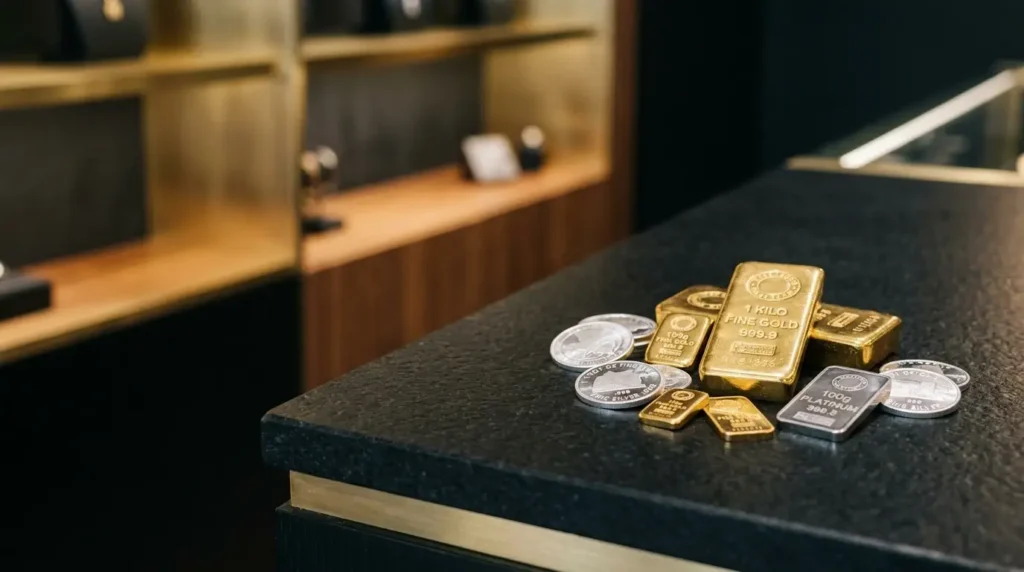
Precious Metal Buyers · Houston, TX Precious Metal Buyer in Houston: 7 Things Hiding in Your House That Are Worth Real Money Most people sell the obvious gold ring and leave the rest in the drawer. Here is what a Houston buyer actually weighs, tests, and pays for. Almost everyone looking for a precious metal buyer in Houston starts with the same thought: a broken chain, an old class ring, maybe a coin their grandfather kept in a cigar box. Then they get to the counter and find out the tarnished flatware, the bent bracelet, the dental crown in the envelope, and the little “950 PLAT” band from a divorce twenty years ago all carry weight too. Precious metals are paid on what they are made of, not on how pretty they look, and that changes what belongs in the bag you bring in. This guide walks through the four metals we buy, how purity is measured, how a fair offer gets calculated, and what to bring to your precious metal appraisal. Quick Answer A precious metal buyer pays based on three things: which metal it is (gold, silver, platinum, or palladium), how pure that metal is (karat or fineness stamp, verified by testing), and how much it weighs in troy ounces or grams. Condition does not matter for scrap value. Broken, tangled, tarnished, and mismatched items are all paid at full metal value, and the only way to know your exact number is to have the pieces weighed and tested in front of you. The Four Metals Gold, Silver, Platinum, and Palladium: What Each One Is Worth to a Buyer Gold is the one everyone knows. It never rusts or tarnishes, which is why a 14k chain buried in a jewelry box since 1998 comes out looking about the same as the day it went in. Karat marks tell you the purity: 24k is 99.9% pure, 18k is 75%, 14k is 58.3%, and 10k is 41.7%, the legal minimum to be called gold in the United States. Silver shows up in more places than people expect. Sterling is stamped 925, meaning 92.5% silver, and it appears on flatware, tea services, trays, picture frames, belt buckles, and older jewelry. Tarnish is only surface oxidation and costs you nothing at the scale. Platinum is denser than gold and usually stamped PLAT, PT950, or 950. A platinum band feels noticeably heavier in the hand than a white gold one of the same size. Palladium, stamped PD500 or PD950, turned up in wedding bands during the 2000s and still carries real industrial demand. Read Your Stamps How to Read the Purity Marks on Your Own Items Before you go anywhere, grab a magnifying glass and look at the clasp of a chain, the inside of a ring band, or the back of a spoon handle. Almost every legitimate precious metal item carries a tiny stamp. Here is what the common ones mean. Stamp Metal Purity 24k / 999 Gold 99.9% pure 22k / 916 Gold 91.6% pure 18k / 750 Gold 75% pure 14k / 585 Gold 58.3% pure 10k / 417 Gold 41.7% pure 925 / Sterling Silver 92.5% pure PLAT / PT950 Platinum 95% pure PD950 Palladium 95% pure GP, GF, HGE, 1/20 12k Plated or filled Base metal with a thin layer, minimal scrap value That last row is the one that disappoints people. GP means gold plated, GF means gold filled, and HGE means heavy gold electroplate. These have a microscopic amount of real gold bonded to brass or steel, and recovering it costs more than it returns. A reputable buyer will tell you that on the spot rather than quietly folding worthless pieces into a lump offer. “Precious metal does not care what shape it is in. A snapped chain and a perfect one of the same weight and karat are worth exactly the same at the scale.” The Math Behind Your Offer How a Precious Metal Buyer Calculates What to Pay You There is no mystery to it, and any buyer who treats the calculation as a trade secret is telling you something. The formula is weight, times purity, times the current market price of that metal, minus a refining and operating margin. Two details trip people up. First, precious metals are priced by the troy ounce, which is about 31.1 grams, not the 28.35 grams of the kitchen ounce you are used to. Second, the “spot price” you see quoted on a financial site is the price for pure, refined, wholesale-quantity bullion, not for a mixed bag of 10k and 14k jewelry that still has to be melted, assayed, and separated. The benchmark itself comes from the twice-daily auction run by the London Bullion Market Association, and it moves every single day, which is why an offer quoted to you last month is not the offer you get today. So if you bring in 20 grams of 14k gold, the buyer is working with roughly 11.7 grams of actual gold content (20 x 0.583), then applying that day’s market rate and a margin. Ask to see the scale reading and the karat test. At a transparent shop you should be able to watch every step of it happen. Worth Knowing Did You Know? Five Facts About Precious Metals Some context for the metal sitting in your dresser drawer right now. 01 All the Gold Ever Mined Would Fit in a Small Building Every ounce of gold pulled out of the earth in human history, melted together, would form a cube roughly 22 meters on each side. That is the entire global supply, and it is why the metal holds value the way it does. 02 Platinum Is Far Rarer Than Gold Annual global platinum production is a small fraction of gold’s, and the vast majority of it comes from just two countries: South Africa and Russia. Scarcity is baked into every platinum band ever made. 03 Silver Conducts Electricity Better Than Anything Else No element

Emerald Jewelry Buyer in Houston
Diamonds & Gemstones

Emerald Jewelry Buyer in Houston: How Much Is Your Emerald Really Worth?

Gemstone Jewelry Buyers · Houston, TX Emerald Jewelry Buyer in Houston: How Much Is Your Emerald Really Worth? A local buyer’s plain-English guide to emerald value, the 4,000-year history behind the stone, and how to get a fair same-day cash offer. If you’re searching for an emerald jewelry buyer in Houston, you’ve probably already noticed that emeralds don’t get valued the same way gold or diamonds do. A ring, pendant, or pair of earrings set with emeralds can be worth anywhere from a modest sum to several thousand dollars, and the difference almost always comes down to a handful of factors most sellers have never had explained to them. Before you take your emerald jewelry anywhere, it helps to understand what a qualified buyer is actually looking at when they set your offer, and what to bring so your appraisal goes smoothly. Quick Answer Emerald value comes down to color first, then clarity, cut, and carat weight. A vivid, medium-toned green stone with good transparency will consistently outsell a pale or heavily included one of the same size, and visible inclusions are normal, not a defect. The only way to know your exact number is a free, in-person appraisal. Emerald Valuation What Determines the Value of Your Emerald Jewelry Like diamonds, emeralds are evaluated on color, clarity, cut, and carat weight, but the order of importance flips. Color comes first. The most desirable emeralds show a vivid, bluish-green to pure green hue with medium-to-dark tone; pale or overly dark stones are worth noticeably less per carat. Clarity is judged differently too. According to the GIA’s emerald quality factors, the trade expects eye-visible inclusions in emeralds and generally accepts them, since they’re proof the stone is natural. An emerald with zero inclusions is actually a red flag for synthetic or imitation material. What does hurt value is when those inclusions reach the surface and compromise transparency or structural stability. Size & Origin Carat Weight and Colombian Origin Matter More Than You’d Think Quality-for-quality, an emerald’s price per carat climbs sharply as the stone gets larger: a well-cut, vividly colored two-carat emerald is worth far more than double a one-carat stone of the same quality. That said, buyers consistently say it’s better to own a smaller emerald with excellent color than a larger one that looks washed out or overly dark. Origin plays a role too. Colombian emeralds, particularly those historically linked to the Muzo and Chivor mining regions, tend to command a premium for their saturated color, though fine emeralds are also mined in Zambia and Brazil. If your jewelry came with a certificate noting origin, bring it. It can meaningfully change the offer. “An emerald without inclusions isn’t rarer. It’s rarely real. The jardin inside your stone is part of its story, not a flaw to apologize for.” A Stone With History Did You Know? Five Curious Facts About Emeralds Before it was a family heirloom, your emerald had thousands of years of history behind it. 01 Cleopatra’s Mines Egypt’s oldest known emerald mines near the Red Sea were worked as far back as 1500 BCE, and legend holds that Cleopatra prized emeralds above every other gem in her collection. 02 The “Jardin” Jewelers call an emerald’s internal inclusions its jardin, French for garden, because the delicate, moss-like patterns inside genuinely look like tangled greenery under magnification. 03 May’s Birthstone Emerald has marked the month of May since at least ancient Rome, worn as a symbol of rebirth, renewal, and the arrival of spring. 04 Sacred Long Before Spain Arrived Centuries before European traders reached South America, the Muzo people of what is now Colombia mined and revered emeralds as sacred stones tied to their gods. 05 Rarer Than a Flawless Diamond A truly flawless, untreated emerald is dramatically rarer than a flawless diamond of the same size. That scarcity is exactly why exceptional, untreated stones can outprice diamonds per carat at auction. Condition & Care Durability: Why Emeralds Need Gentler Handling Than Diamonds Emeralds rank 7.5 to 8 on the Mohs hardness scale, which sounds tough, but hardness only measures resistance to scratching, not resistance to breaking. Because most emeralds carry natural internal fractures, their overall toughness is only fair to good, meaning they chip more easily than a diamond, ruby, or sapphire of similar hardness. Most emeralds on the market have also been clarity-enhanced with oil or resin to fill surface-reaching fractures and improve transparency. This is standard industry practice and doesn’t automatically devalue a stone, but heavy treatment does affect price, and heat, ultrasonic cleaners, and harsh chemicals can degrade the fillers over time. If you’re not sure how your piece has been treated or cared for, don’t attempt to clean it yourself before an appraisal. Let the buyer inspect it as-is. Before You Visit 5 Things to Know Before Selling Emerald Jewelry in Houston A little preparation makes the appraisal faster and your offer easier to trust. 01 Bring a Valid Photo ID Texas requires a government-issued ID for any precious item purchase, so have your driver’s license or passport ready. 02 Bring Any Paperwork GIA reports, appraisals, or original receipts help support a stronger offer, especially for larger or certified stones. 03 Loose or Set: Both Work Whether your emerald is mounted in a ring, pendant, or earrings, or sitting loose in a drawer, it can still be appraised and purchased. 04 No Appointment Needed Walk-ins are always welcome. Most evaluations take just 10 to 15 minutes from start to offer. 05 Watch the Appraisal Happen A trustworthy buyer evaluates your emerald jewelry in front of you on certified scales, never in a back room. If a buyer won’t let you watch, that’s a reason to walk away. Ready to Find Out What Your Emerald Jewelry Is Worth? At Houston Cash For Gold, our gemstone specialists evaluate emerald rings, pendants, earrings, and loose stones the same transparent way, right in front of you, with no appointment and no obligation. We factor in color, clarity,

Silver Buyer in Houston
Silver

Silver Buyer in Houston | Real vs Plated & Value

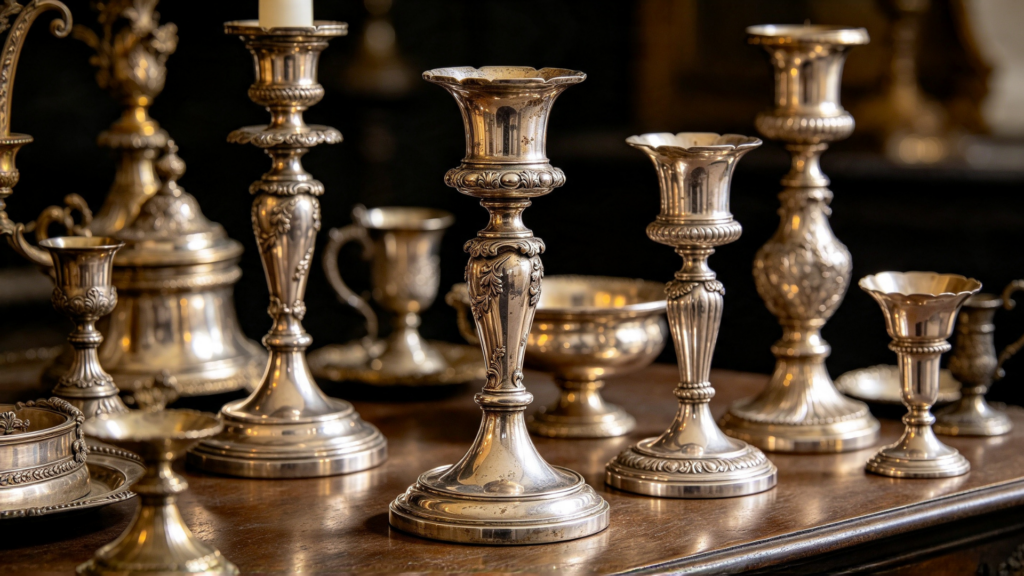
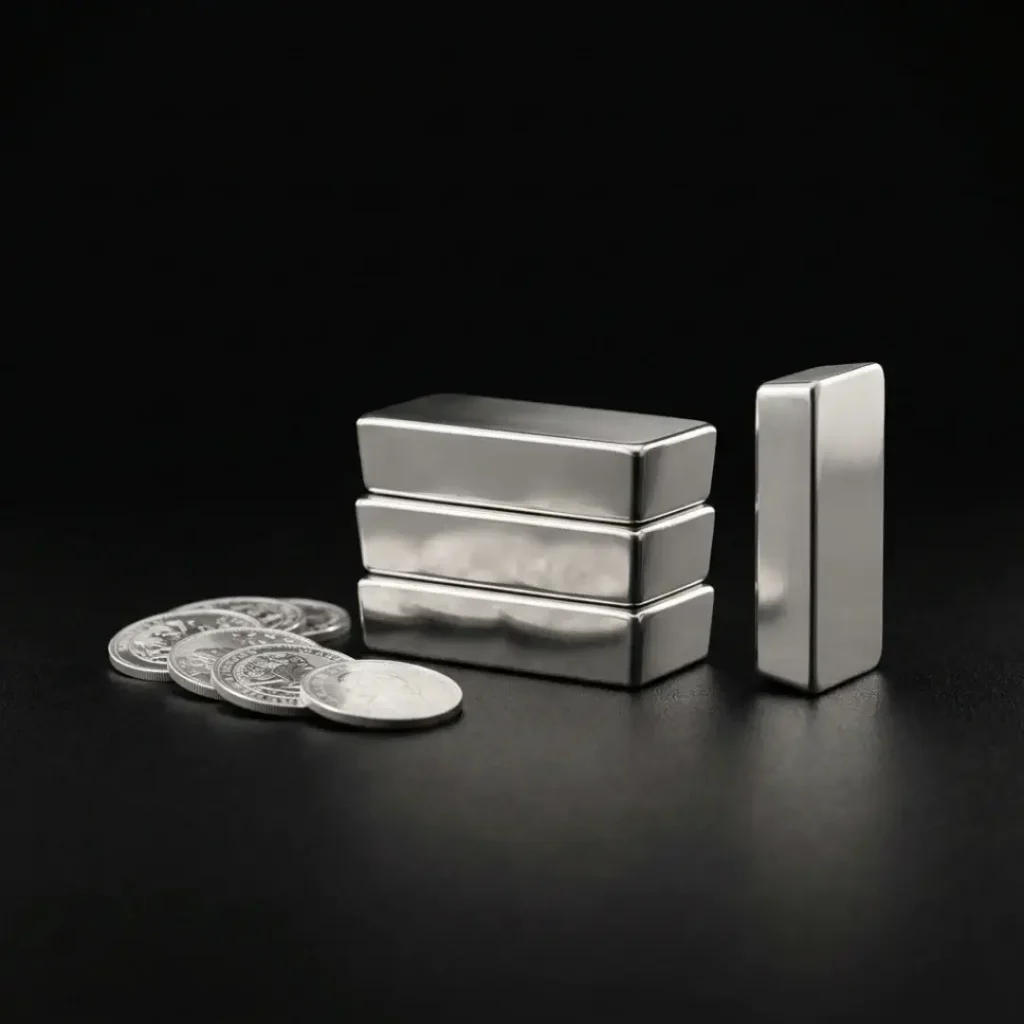
Silver Buyers · Houston, TX Silver Buyer in Houston: How to Tell Real Silver From Plated in Under a Minute Three quick tests, one stamp chart, and the one silverware trick that costs sellers the most money. Nearly everyone who walks in looking for a silver buyer in Houston is carrying at least one thing that turns out to be plated, and at least one thing they had written off that turns out to be solid. A tarnished tray from a grandmother’s china cabinet is often the real deal. The gleaming “silver” candlesticks that look brand new frequently are not. The difference is not something you need a jeweler to spot: with a magnet, a magnifying glass, and about sixty seconds, you can sort most of your own collection before you leave the house. Here is exactly how, and what each type is actually worth at the counter. Quick Answer Real silver is not magnetic, carries a purity stamp (925, Sterling, 900, or 800), and tarnishes to a warm black or brown rather than flaking. Plated pieces are marked EP, EPNS, Silver Plate, or nothing at all, usually stick to a magnet through the base metal, and show copper or grey showing through at worn edges. Solid silver is paid by weight and purity; plated silver has essentially no scrap value. The 60-Second Test Three Checks You Can Do at Your Kitchen Table Right Now 1. The magnet test. Silver is not magnetic. Grab a strong magnet, ideally a small neodymium one off the fridge, and hold it against the piece. If it grips, you are feeling the steel or nickel core under a plated surface. A weak, sliding pull on a heavy piece can also mean a magnetic clasp or a steel knife blade fitted into a genuine silver handle, so test the body of the item, not the hardware. 2. The stamp check. Use a magnifying glass and look at the clasp of a chain, the underside of a spoon handle, the rim of a tray, or the base of a bowl. Solid silver almost always announces itself. If the only mark you find reads EP, EPNS, A1, Silver on Copper, or Quadruple Plate, it is plated. 3. The tarnish read. Real silver oxidizes into a smooth, even black or warm brown film that follows the contours of the piece. Plating wears differently: it thins at the high points, so you see pinkish copper or dull grey peeking through on the raised edges of a handle or the rim of a tray. Once you know that pattern, you can spot plate across a room. Read the Marks What the Numbers Stamped on Your Silver Actually Mean Silver purity is expressed in parts per thousand. 925 is sterling, meaning 92.5% pure silver with 7.5% copper added for hardness. That copper is why sterling tarnishes at all; pure silver barely does. 900 is coin silver, the American standard before sterling took over in the mid-1800s, and it turns up on older spoons and serving pieces. 800 and 835 are continental European standards common on imported flatware. 958 is Britannia silver, softer and rarer. British pieces often skip numbers entirely and use pictorial hallmarks instead: a walking lion (the lion passant) certifies sterling, alongside a city mark and a date letter. Those marks are worth showing a buyer rather than scrubbing off, because they can add collector value on top of metal value. Reference Chart Silver Stamp Cheat Sheet Print this, or just keep it open on your phone while you sort through the cabinet. Mark What It Is Silver Content 999 / Fine Silver Bullion bars and rounds 99.9% 958 / Britannia British higher standard 95.8% 925 / Sterling / Ster Standard sterling silver 92.5% 900 / Coin Early American coin silver 90% 835 / 800 European continental silver 83.5% / 80% Lion passant British sterling hallmark 92.5% EP / EPNS / A1 Electroplated nickel silver Trace plating only Silver Plate / Quadruple Plate Plated base metal Trace plating only German Silver / Nickel Silver Copper, nickel and zinc alloy No silver at all That last row surprises people every week. “German silver” and “nickel silver” contain zero silver. The names describe the color, not the content, and they were never intended to deceive anyone, but a century later they routinely do. “Tarnish is not damage. It is a thin layer of oxidation that weighs nothing and costs you nothing. Polishing it off, on the other hand, removes real metal.” The Costly Mistake Weighted Silver: Why That Heavy Candlestick Is Lighter Than It Looks Here is the single biggest surprise in silver selling. Candlesticks, trophy cups, salt and pepper shakers, and knife handles are frequently made as weighted or reinforced pieces: a thin shell of genuine sterling formed around a core of plaster, cement, pitch, or resin. Look for “Weighted,” “Reinforced,” or “Sterling Weighted” stamped on the base. The silver is real, but you are holding maybe a few ounces of it inside a piece that weighs a pound and a half. A buyer has to estimate the shell weight, which is why a weighted candlestick pair rarely pays what its heft suggests. Nobody is shortchanging you; the filler simply is not silver. Hollow-handled knives work the same way. The blade is stainless steel and the handle is a sterling shell packed with cement. Bring them in anyway, just know the number will be lower than the flatware sitting next to them. Junk Silver Check Your Change Jar: Pre-1965 US Coins Are 90% Silver Dimes, quarters, and half dollars minted in the United States through 1964 were struck in an alloy of 90% silver and 10% copper. In 1965 the composition changed to copper-nickel clad, and the silver came out. Kennedy half dollars from 1965 through 1970 kept a reduced 40% silver content, and wartime “war nickels” from 1942 to 1945 carry 35% silver. The full breakdown of every alloy the Mint has used is published in the US

Speak To A Jeweler