
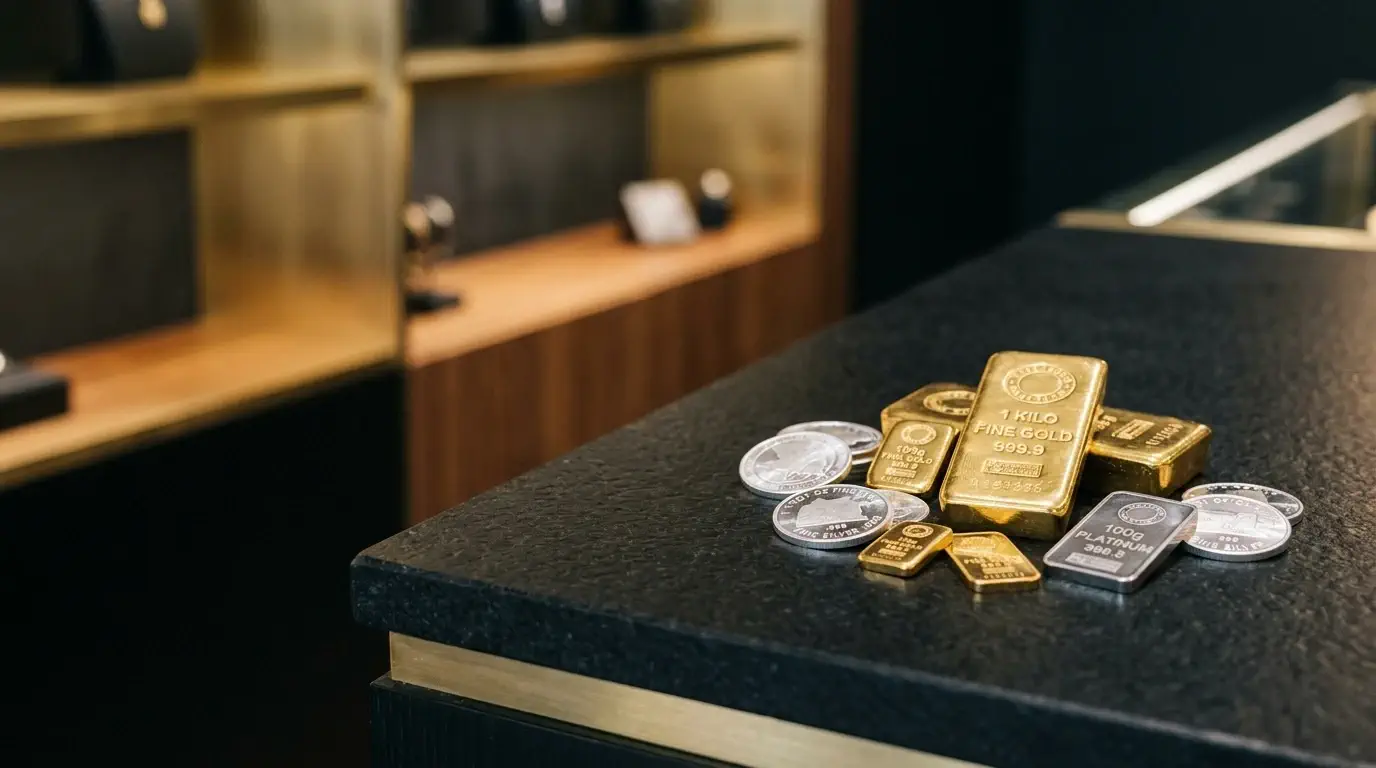
Precious Metal Buyer in Houston: 7 Things Hiding in Your House That Are Worth Real Money
Most people sell the obvious gold ring and leave the rest in the drawer. Here is what a Houston buyer actually weighs, tests, and pays for.
Almost everyone looking for a precious metal buyer in Houston starts with the same thought: a broken chain, an old class ring, maybe a coin their grandfather kept in a cigar box. Then they get to the counter and find out the tarnished flatware, the bent bracelet, the dental crown in the envelope, and the little "950 PLAT" band from a divorce twenty years ago all carry weight too. Precious metals are paid on what they are made of, not on how pretty they look, and that changes what belongs in the bag you bring in. This guide walks through the four metals we buy, how purity is measured, how a fair offer gets calculated, and what to bring to your precious metal appraisal.
A precious metal buyer pays based on three things: which metal it is (gold, silver, platinum, or palladium), how pure that metal is (karat or fineness stamp, verified by testing), and how much it weighs in troy ounces or grams. Condition does not matter for scrap value. Broken, tangled, tarnished, and mismatched items are all paid at full metal value, and the only way to know your exact number is to have the pieces weighed and tested in front of you.
Gold, Silver, Platinum, and Palladium: What Each One Is Worth to a Buyer
Gold is the one everyone knows. It never rusts or tarnishes, which is why a 14k chain buried in a jewelry box since 1998 comes out looking about the same as the day it went in. Karat marks tell you the purity: 24k is 99.9% pure, 18k is 75%, 14k is 58.3%, and 10k is 41.7%, the legal minimum to be called gold in the United States.
Silver shows up in more places than people expect. Sterling is stamped 925, meaning 92.5% silver, and it appears on flatware, tea services, trays, picture frames, belt buckles, and older jewelry. Tarnish is only surface oxidation and costs you nothing at the scale.
Platinum is denser than gold and usually stamped PLAT, PT950, or 950. A platinum band feels noticeably heavier in the hand than a white gold one of the same size. Palladium, stamped PD500 or PD950, turned up in wedding bands during the 2000s and still carries real industrial demand.
How to Read the Purity Marks on Your Own Items
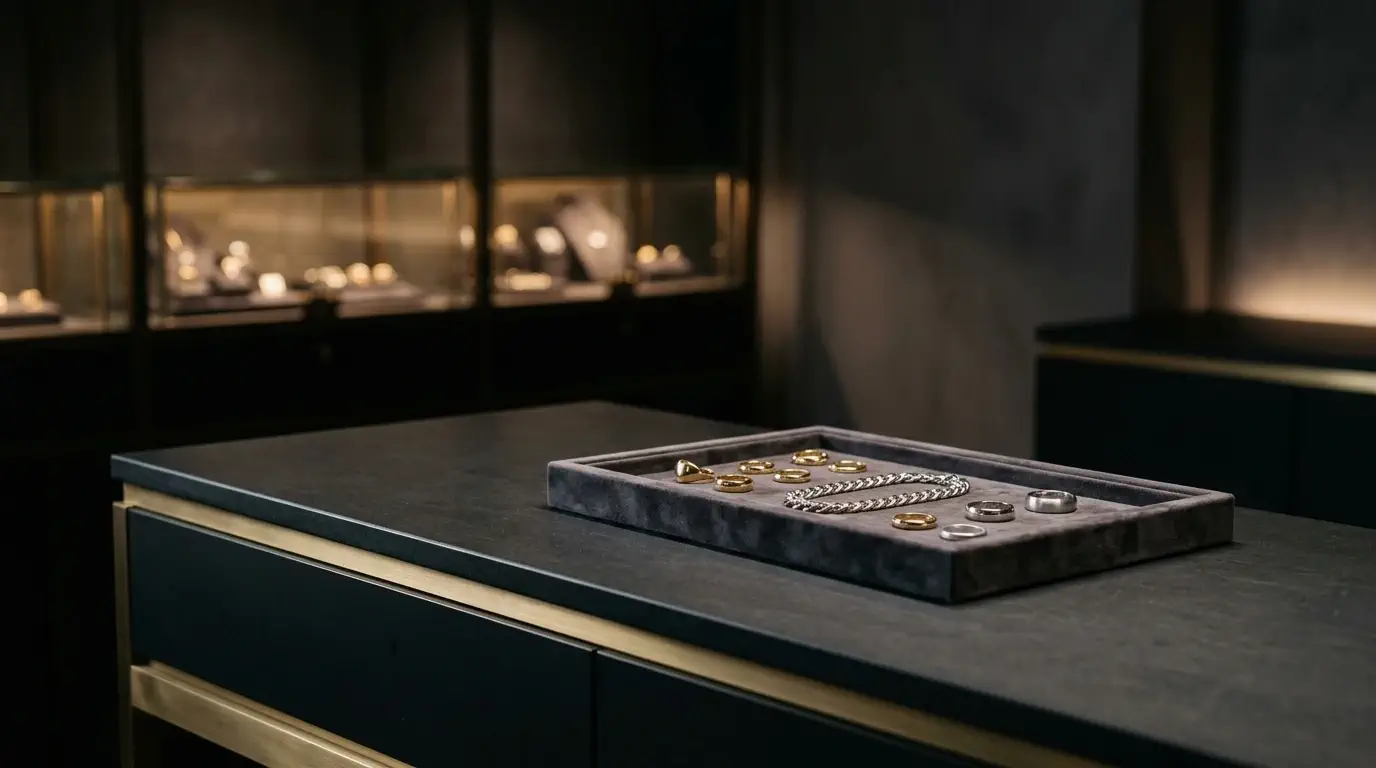
Before you go anywhere, grab a magnifying glass and look at the clasp of a chain, the inside of a ring band, or the back of a spoon handle. Almost every legitimate precious metal item carries a tiny stamp. Here is what the common ones mean.
| Stamp | Metal | Purity |
|---|---|---|
| 24k / 999 | Gold | 99.9% pure |
| 22k / 916 | Gold | 91.6% pure |
| 18k / 750 | Gold | 75% pure |
| 14k / 585 | Gold | 58.3% pure |
| 10k / 417 | Gold | 41.7% pure |
| 925 / Sterling | Silver | 92.5% pure |
| PLAT / PT950 | Platinum | 95% pure |
| PD950 | Palladium | 95% pure |
| GP, GF, HGE, 1/20 12k | Plated or filled | Base metal with a thin layer, minimal scrap value |
That last row is the one that disappoints people. GP means gold plated, GF means gold filled, and HGE means heavy gold electroplate. These have a microscopic amount of real gold bonded to brass or steel, and recovering it costs more than it returns. A reputable buyer will tell you that on the spot rather than quietly folding worthless pieces into a lump offer.
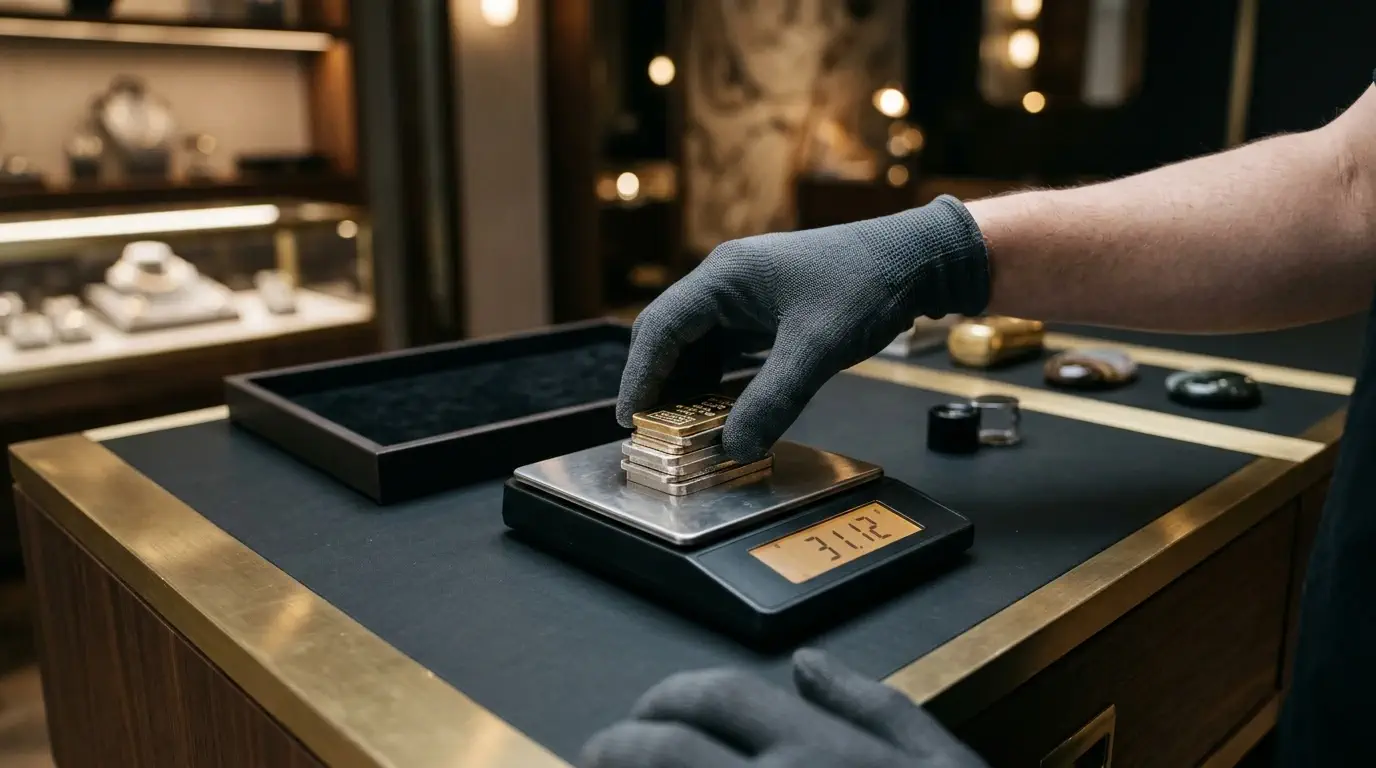
"Precious metal does not care what shape it is in. A snapped chain and a perfect one of the same weight and karat are worth exactly the same at the scale."
How a Precious Metal Buyer Calculates What to Pay You
There is no mystery to it, and any buyer who treats the calculation as a trade secret is telling you something. The formula is weight, times purity, times the current market price of that metal, minus a refining and operating margin.
Two details trip people up. First, precious metals are priced by the troy ounce, which is about 31.1 grams, not the 28.35 grams of the kitchen ounce you are used to. Second, the "spot price" you see quoted on a financial site is the price for pure, refined, wholesale-quantity bullion, not for a mixed bag of 10k and 14k jewelry that still has to be melted, assayed, and separated. The benchmark itself comes from the twice-daily auction run by the London Bullion Market Association, and it moves every single day, which is why an offer quoted to you last month is not the offer you get today.
So if you bring in 20 grams of 14k gold, the buyer is working with roughly 11.7 grams of actual gold content (20 x 0.583), then applying that day's market rate and a margin. Ask to see the scale reading and the karat test. At a transparent shop you should be able to watch every step of it happen.
Did You Know? Five Facts About Precious Metals
Some context for the metal sitting in your dresser drawer right now.
All the Gold Ever Mined Would Fit in a Small Building
Every ounce of gold pulled out of the earth in human history, melted together, would form a cube roughly 22 meters on each side. That is the entire global supply, and it is why the metal holds value the way it does.
Platinum Is Far Rarer Than Gold
Annual global platinum production is a small fraction of gold's, and the vast majority of it comes from just two countries: South Africa and Russia. Scarcity is baked into every platinum band ever made.
Silver Conducts Electricity Better Than Anything Else
No element on the periodic table conducts electricity or heat better than silver. That is why industrial demand, from solar panels to electronics, competes directly with jewelry demand for supply.
Gold Is Genuinely Edible and Genuinely Everywhere
Pure gold is chemically inert, which is why gold leaf is safe on desserts, why dental gold lasted decades in people's mouths, and why the gold in your old chain has not degraded one bit since the day it was cast.
One Gram of Gold Can Be Drawn Into a Wire Over a Mile Long
Gold is the most malleable metal known. A single gram can be hammered into a sheet roughly a square meter in size, thin enough to see light through. The USGS gold statistics and information center tracks how much of the world's supply goes into industry versus jewelry each year.
Seven Items People Forget to Bring to a Precious Metal Buyer
The single most common thing we hear in the shop is "I didn't know you took that." Before your visit, check for these:
1. Sterling flatware and serving pieces. Inherited silverware sets sit in basements because nobody uses them. Check the handles for a 925 or Sterling stamp. Weight adds up fast on a full set.
2. Single earrings and broken chains. The lost mate does not reduce the gold content of the one you still have.
3. Dental gold. Crowns and bridges are usually a high-karat gold alloy and are routinely purchased.
4. Class rings and military rings. Often 10k or 14k with real heft to them.
5. Old coins and bullion rounds. Pre-1965 US dimes, quarters, and half dollars are 90% silver. So is a lot of what people assume is pocket change.
6. Platinum and palladium wedding bands. Frequently mistaken for white gold or even stainless steel and left behind.
7. Gold-cased pocket watches and watch cases. Even when the movement is dead, the case may be solid gold.
5 Things to Do Before Selling Precious Metals in Houston
A few minutes of prep makes the appraisal faster and the offer easier to verify.
Bring a Valid Photo ID
Texas law requires a government-issued ID for any precious metal purchase. A driver's license, state ID, or passport works.
Sort by Metal, Not by Sentiment
Separate gold from silver from platinum if you can read the stamps. It speeds up weighing and makes the line-by-line breakdown easier to follow.
Do Not Polish Coins or Clean Antique Silver
Polishing removes metal and can strip collector value from a coin entirely. Bring items exactly as they are and let the buyer assess them.
Check the Day's Market Before You Go
Metal prices move daily. Knowing roughly where gold and silver sit that morning tells you whether an offer is in a sensible range.
Insist on Watching the Weighing and Testing
Everything should happen on a certified scale in front of you, with the karat test done where you can see it. If any part of the evaluation happens in a back room, leave. That single rule protects you more than any other piece of advice on this page.
Find Out What Your Precious Metals Are Actually Worth
At Houston Cash For Gold, we buy gold, silver, platinum, and palladium in any form and any condition: jewelry, scrap, coins, bars, flatware, and dental gold. Every item is weighed on certified scales and tested right in front of you at our shop at 1801 Durham Drive, minutes from The Heights, Montrose, and downtown. You get a clear breakdown of weight, purity, and price per item, a competitive same-day cash offer, and zero obligation to accept it. Walk-ins are welcome, no appointment and no credit check required. Bringing in gold jewelry, diamonds, or a luxury watch at the same time is no problem either, and you can browse more seller guides on our blog.
Precious Metal Buyer in Houston: FAQ
The questions Houston sellers ask us most before bringing metals in.
Houston Cash For Gold buys gold, silver, platinum, and palladium at 1801 Durham Drive Suite 9, Houston, TX 77007, close to The Heights, Montrose, and downtown. We purchase jewelry, scrap, coins, bars, sterling flatware, and dental gold, and every item is weighed and tested in front of you before we make an offer.
Your offer is based on the weight of the item, its purity (the karat or fineness), and the current daily market price for that metal. For example, 20 grams of 14k gold contains about 11.7 grams of pure gold, since 14k is 58.3% gold. Because metal prices change every day, the only accurate number is one calculated at the time of your appraisal.
Yes. Scrap value is based on metal content, not appearance, so a snapped chain, a bent ring, a single earring, or tarnished silver is worth the same as an intact piece of identical weight and purity. Bring it all in, damaged pieces included.
Very little. Marks like GP, GF, HGE, or 1/20 12k indicate a thin layer of gold bonded to a base metal such as brass or steel. The recoverable gold content is minimal, so these pieces generally carry no meaningful scrap value. We will tell you straight away rather than mixing them into a lump offer.
Spot price is the wholesale market rate for pure, refined bullion traded in large quantities. Jewelry and scrap still have to be melted, assayed, and refined before that metal can re-enter the market, so a buyer's offer reflects the purity of your specific items minus refining and operating costs. A transparent buyer shows you the weight, the purity, and the math.
A pawn shop typically offers a collateral loan, holding your item as security while you repay the loan plus interest. A direct buyer like Houston Cash For Gold purchases your metal outright for cash, with no loan, no interest, and no need to come back for it. If your goal is cash today rather than borrowing, a direct buyer is the simpler route.
We start by reading the purity stamp, then verify it. Testing methods include acid testing on a touchstone and electronic or XRF analysis, which reads the actual composition of the alloy without damaging the piece. All testing is done at the counter where you can watch it, so nothing about the process is hidden.
Bring a valid government-issued photo ID, which Texas law requires for precious metal transactions, plus the items themselves. Any certificates, original receipts, or purchase paperwork you have can help, especially on bullion and collectible coins, but they are not required. No appointment is needed and there is no credit check.
Get a Free Precious Metal Appraisal Today
Bring your gold, silver, platinum, and palladium to 1801 Durham Drive and watch it weighed and tested at the counter. Fair same-day cash, no appointment, no credit check, no obligation to sell.
Call or text (832) 295-9155 · 1801 Durham Drive Suite 9, Houston, TX 77007